A HANDS-ON CHERRY SEASON

A quick glance at a woman's hands will tell whether she gathers or she shops for summer produce.  Hint: harvesting fruits and vegetables will wreck long, impeccably polished nails in the time it takes apply insect repellant. My own nails were a  manicurist's worst nightmare last week.  The dark, goulish stains around and under my  fingernails were the price I readily paid for the pleasure of picking cherries from the tree in my front yard.

When cherries are ripe there is no time to lose.  The window of opportunity lasts less than a week.  The process of picking two to three pounds, culling, rinsing off debris  and relieving them of their pits takes the better part of a morning.  Every year I test several cherry pitters hoping one will magically prove to do the job quickly and cleanly.  Yet again, this year I found impaling each cherry with a plastic straw was the most efficient but messy solution.  Note: Eat as you work; there are fewer to pit.
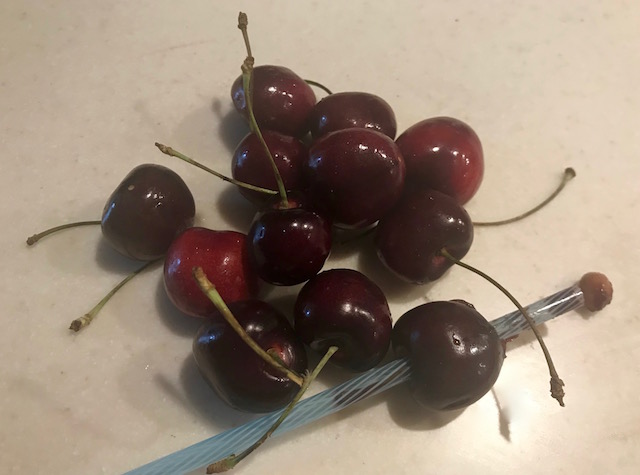
  

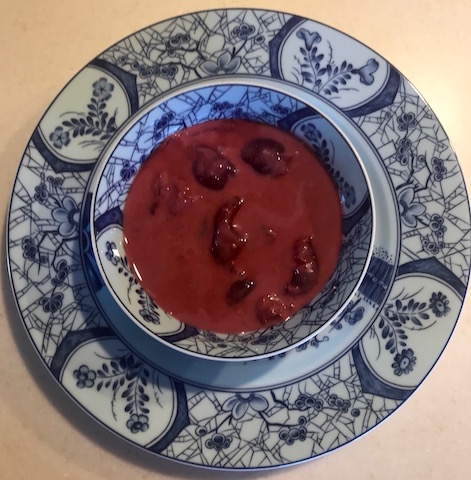
If all this sounds slow and low tech, it is.  Working with one's hands is also a hugely satisfying way to tune out the world.  And when you are finished there are enough cherries to prepare a refreshing Cold Cherry Soup for dinner and preserve a pound or more for the future.   This soup takes minutes to cook is also a beautiful ruby color.  A last minute garnish of red wine vinegar leaves a moire pattern on the surface.  It’s a picture suitable for framing.

It so happens that I have the perfect bowl and plate for serving it.   Some years ago I bought a set of blue dishes covered with a cherry blossom pattern in a seconds shop in Limoges.  Claude Monet himself had designed this tableware for his home outside Paris in Giverny.  He was inspired by the numerous Japanese prints that lined the walls of the dining room.  His careful curation of every element in that room has the stunning  effect of unifying life at the table with art.
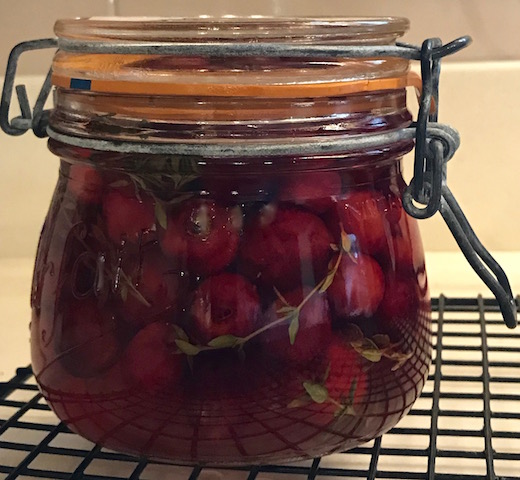
 

How, I wondered, would Claude Monet's cook have preserved cherries in the kitchen at Giverny a century ago?  I checked for recipes in a wonderful memoir and cookbook, Monet's Table  written by Claire Joyes, the wife of Monet's great-grandson.  What she gathered from Monet's handwritten cooking journals and her personal contact with Marguerite, the cook, are rudimentary recipes by today's standards. Cherries were preserved by sealing them in jars with their juices, submerging them in a water bath and boiling the jars for twenty minutes. Brandies cherries were  macerated in a strong eau de vie (double distilled from raisin skins and seeds).

I chose to use recipes from contemporary sources for preparations of Pickled Cherries* and Spicy Cherries in Wine**.  Both the pickle brine and sugar syrup for the sweet preserve are easy to assemble.  The cherries will age in these solutions over a period of months in the refrigerator, although the cherry pickles are disappearing quickly.  They make a great garnish with cheese and a piquant addition to summer salads.   I will be guarding the spiced cherries for winter desserts.

* Six Seasons, by Joshua McFadden, pages 57-58.

** Jacques Pepin Celebrates, by Jacques Pepin, page 401.


A MONTREAL HOLIDAY


I was among what a friend called 'the crazies' who traveled by air to visit family over the holidays. I left Chicago a day before the 24 hour Covid test went into effect and arrived in Montreal the afternoon the city closed all but essential businesses.   With useless food guides in hand, I stepped out of the tourist office into a winter wonderland.  The deserted streetin the Old Port quarter looked like a holiday movie set covered in lightly falling snow.     


This much was clear.  What I learned about Montreal in the coming week would be confined to walking its streets and visiting its food markets.  That suited me just fine. 


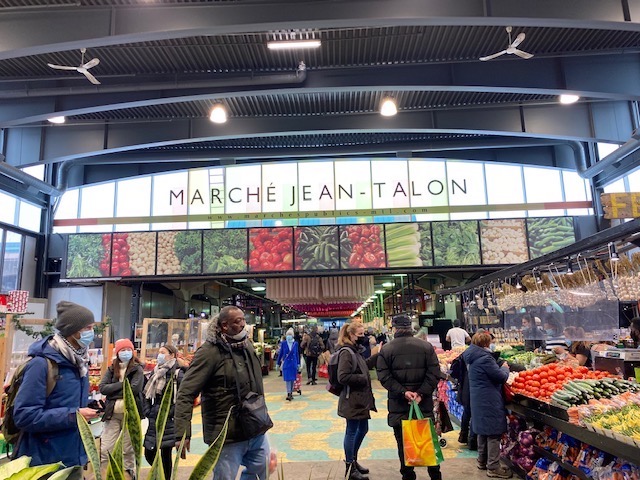
The Quebecois are as gourmand as Parisians when it come to the quality of their ingredients.  Paris relies on a central market the size of Monaco for its ingredients.  Montreal supports no fewer than twelve daily farmers’ markets.  The largest, Marché Jean Talon, fills an entire block and can swell to 300 merchants in the summertime.  The streets surrounding this covered market are packed with brick and mortar specialty shops and ethnic cafes.  One corner is anchored by the government-run liquor store Montreal’s Little Italy groceries are a five minute walk and were stocked with holiday delicacies the week of my visit.   


Montreal, like Paris, began as an island community that grew exponentially, but the Montrealais can still experience the wilderness that their city displaced.  Two-thirds of the province is still covered with boreal foresta unique ecosystem owned and managed by the Canadian government.  It’s spruce and birch trees absorb and repurpose carbon dioxide while providing year round hunting, fishing and vacation opportunities. 


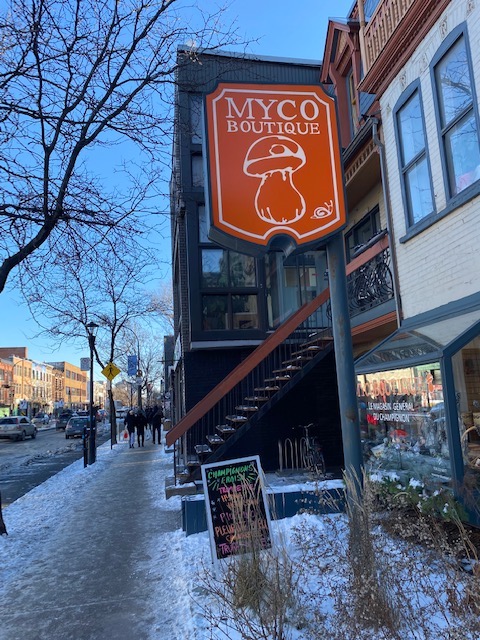
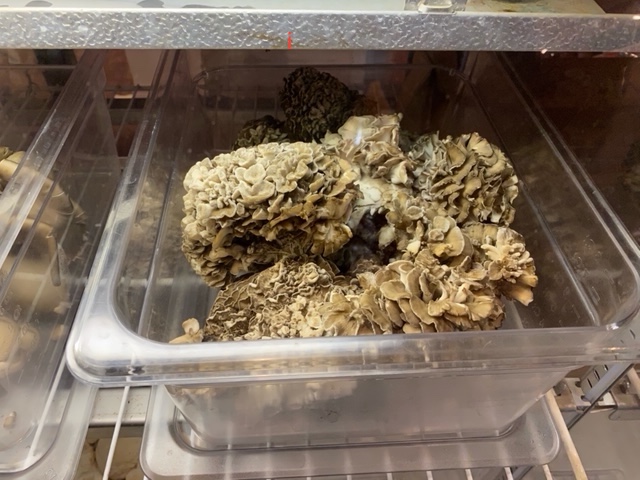
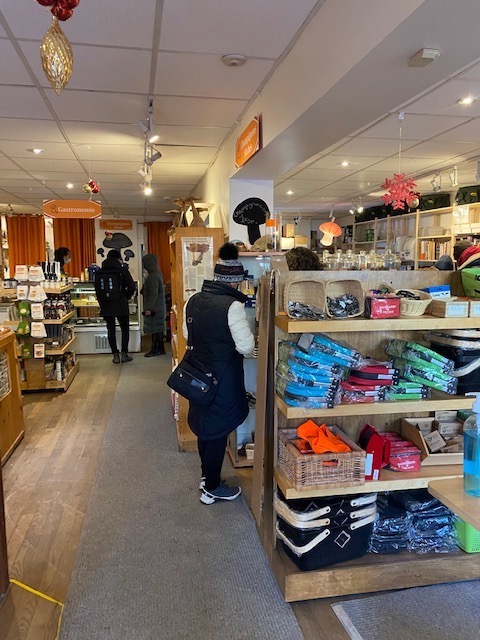
It’s no surprise then that  Mycoboutique has sprouted in downtown Montreal.  This small shop sells everything having to do with mushrooms including kits to grow mushrooms at home. A morning spent browsing in this shop will turn a confirmed carnivore into mushroom geek.  Of course, there is a vendor of fresh mushrooms at Jean Talon market.   As we purchased an oyster mushroom the size of a giant zucchini, the enthusiastic salesman instructed us to thinly slice and spread it on that evening’s pizza before it went in the oven.  The results were delicious! 


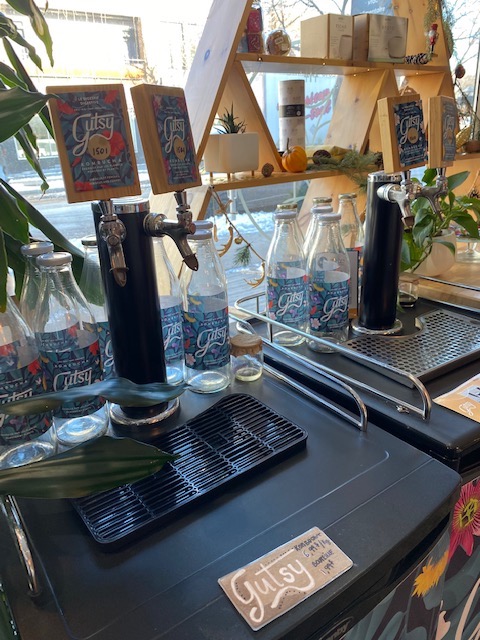
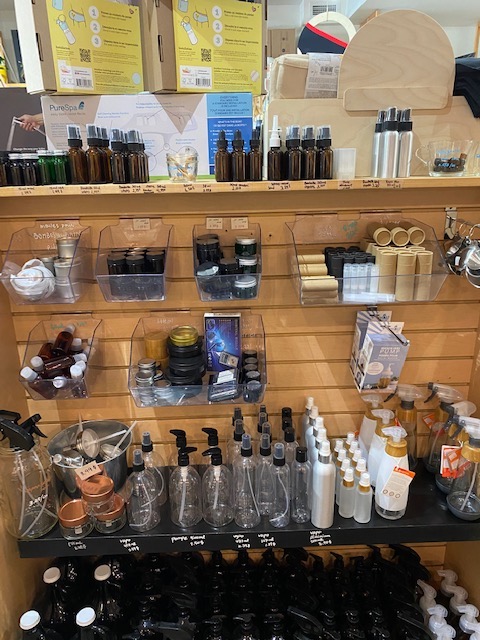
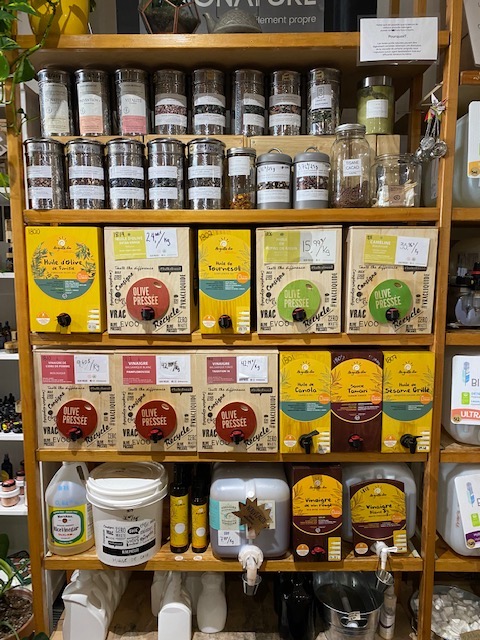
A growing number of small, no-waste (zero dechet) groceries is another example of Montreal’s eco-consciousness.   My daughter gathered glass jars to fill during our visit to La Reserve Naturelle down the street from her home.  This shop serves the neighborhood much as general store did in the frontier era.   Shoppers fill their containers with cleaning supplies, kitchen staples, cosmetics and skincare liquids from bulk containers.   Glass and reusable plastic containers are for sale to newcomers who arrive empty-handed.  Where else could one find two flavors of kombucha on tap?


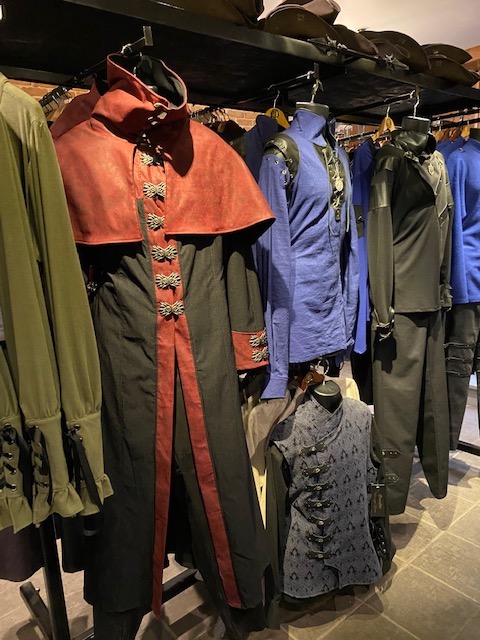
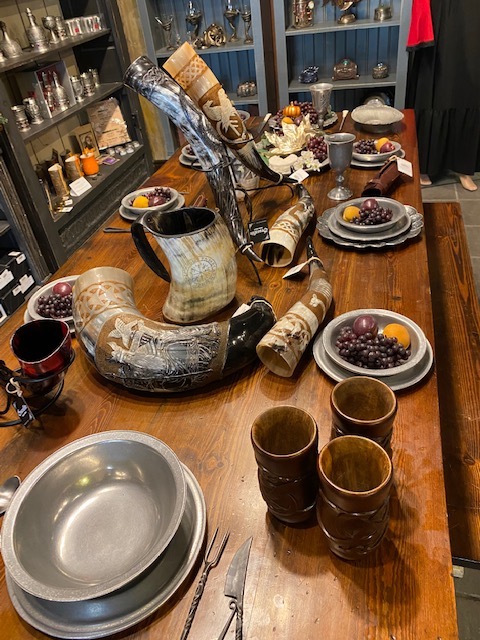
Just down the block from this progressive shop is a delightful strip of small storefronts that stretch the term ‘eclectic’ about as far as it can go.  Among the predictable bookstores, cafes, even an upscale restaurant, is a building rented to the  Universelle Church of Christ at ground level and a yoga studio with harnesses and straps hanging in the window upstairs.  Male and female mannequins wearing X-rated lingerie fill two full-length showroom windows of Seductions across the street.  At La Maison de Mademoiselle Dumpling, a few doors away, four Chinese cooks dressed in white stand around a table in the front window rolling and stuffing dumplings. Nearby, Boutique Medievale Dracolite will delight anyone ready for something completely different.  Twelfth century home furnishings and an extensive period dress selection for the chivalrous nobleman and his wife are packed into two floors.  One could walk out dressed and armed for an appearance in Game of Thrones.


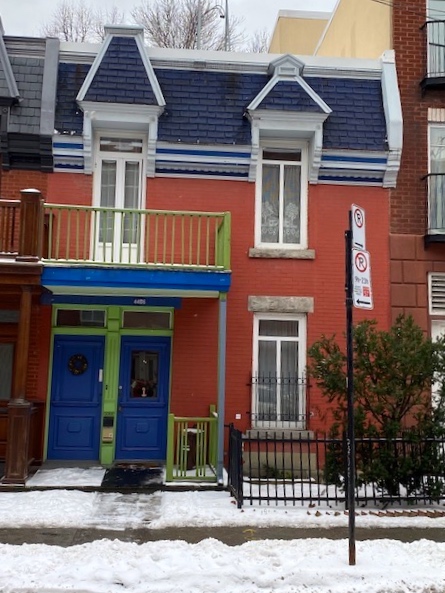
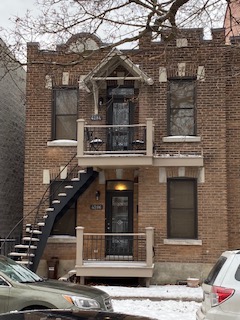
The well-groomed homes that line streets we walked in The Plateau neighborhood have enough visual details to engage a pedestrian navigating an icy sidewalks.  Three-story houses are packed side-by-side and distinguished by an occasional architectural flourish or unusual color scheme that breaks up the uniformity.  Each house may contain as many as five units determined by counting the number of doors that are accessible from ground level to a graceful outdoor metal stairway.   


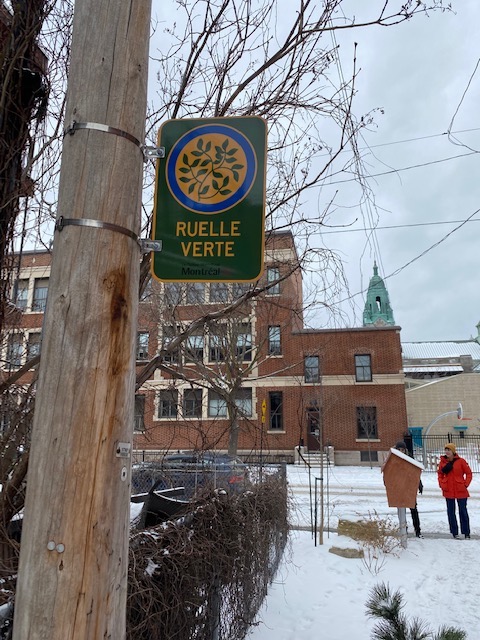
Other finds along our route included what appeared to be an outsized bird feeder that turned out to be filled with books to exchange for free.   Every few blocks the entrance to an alley was posted with a Ruelle Verte (green lane) sign.  In the Spring, these alleys will be cleared and landscaped by those who access them for the pleasure of locals and the public.  The Ruelle Verte improvement project began in 1997 and now numbers more than 400 alleys in Montreal.  A published guide to the 20 best alleys for walking testifies to its success. 


I look forward to getting to know Montreal better when Covid subsides and the snow melts. 


Best wishes to all for a healthy and productive New Year!


A NEW YEAR'S FISH STORY

JP-SALMON-popup

The holiday leftovers are long gone.  Only a joke grab-bag food gift remains on my kitchen counter - it's the "World's Largest Gummy Bear", a 5 pound blob of gelled cherry-flavored corn syrup.  After providing comic relief at the family gift exchange, now, by default, I’m left wondering what to do with this super-sized piece of 21st century Americana.

A NEW YEARS QUESTION


blini1
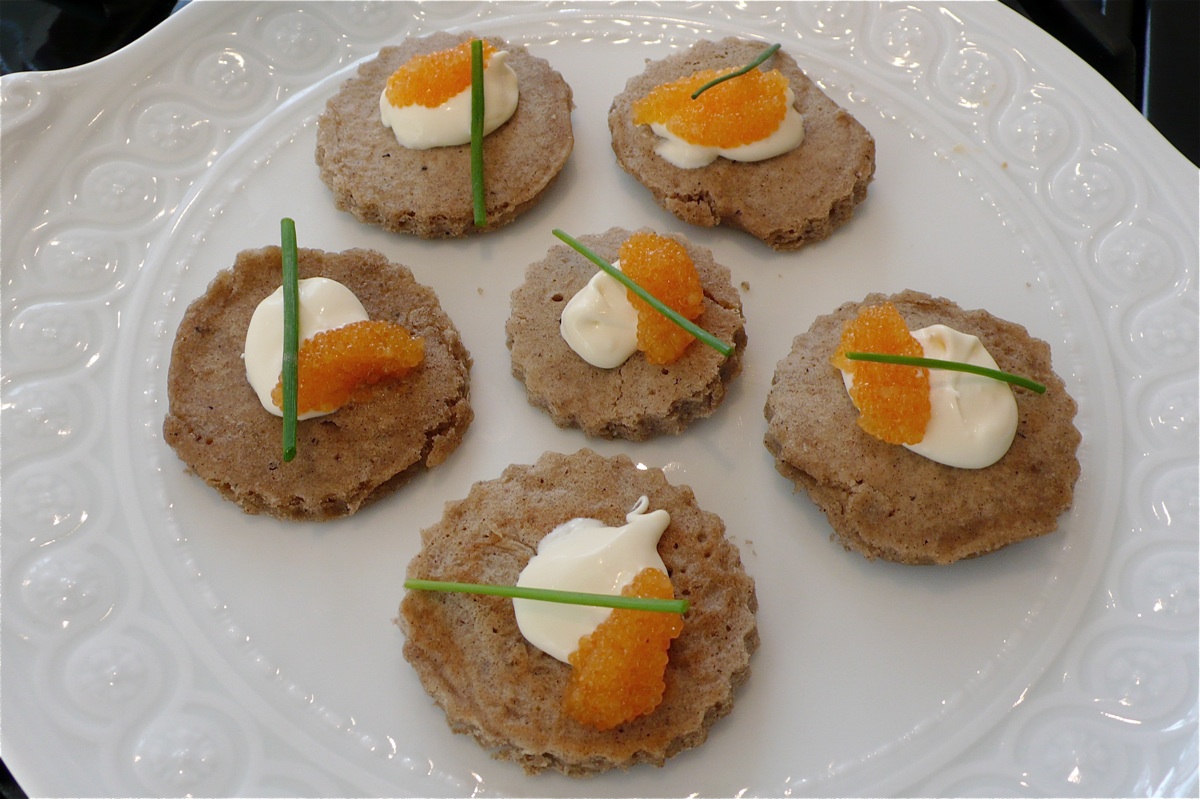
Most people will ask you what you’re doing New Year’s Eve.  Not me. “What are you eating on New Years?” is the only thing on my mind.  If you don’t have your own answer ready, here are a few simple recipes for celebrating with carefully restrained excess throughout the weekend.

A PELARDON STORY


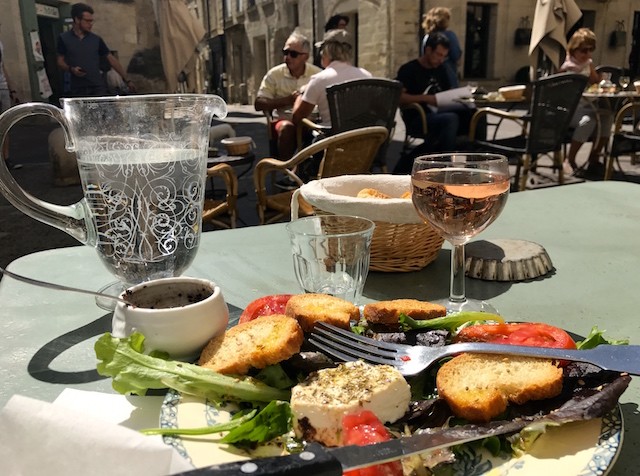
In France, all cheese is local, but rarely do we actually taste it in the ‘hood’ where it was made.  When I order a goat cheese salad in the town of Uzès near the Pont du Gard, I know I will be served a creamy white disk of Pelardon.  If it came from the farm of Mme. Gueit, I can even picture the faces of the alpine goats from whose milk it was made.  I’ve been there and met them!  

Like many other wonderful foods in France Pelardon’s rich, picante flavor is protected by law.  In 2000 the French government recognized its distinctive character and awarded it AOC status.  This designation specifies the regional boundaries and production practices that must be followed in order for a cheese to bear the Pelardon name.  (Are there cheese police out there?)


 That said, there have to be small flavor differences among Pelardon.  As a raw milk cheese it is literally alive with microbes that modify its flavor over time. Changes in temperature and humidity play a role, and each farm has a slightly different microclimate.  Pelardon isn’t just produced, it’s created.  The French like it that way. 

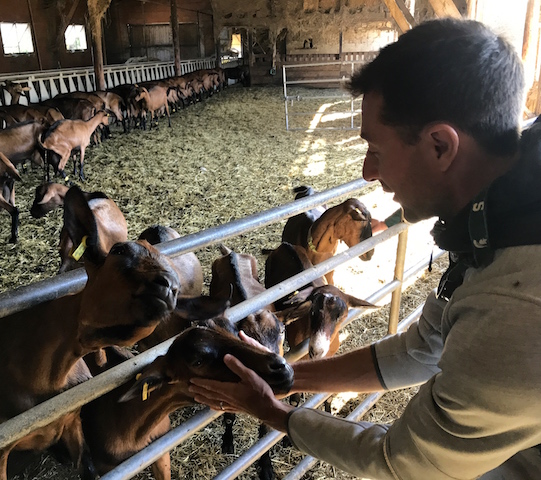
To observe the cheesemaking process close-up my culinary tour group visited Mme. Gueit’s farm in the rugged foothills of the Park of the Cévannes thirty minutes north of Uzès last month.  We were met by Mme. Gueit at the entrance to the large barn on the property where several dozen goats were quietly eating a breakfast of organic hay.  A few curious goats wandered over to greet us. They were attractive, social animals who twisted their heads through the bars of a metal barrier so that we could rub their muzzles scratch behind their ears.

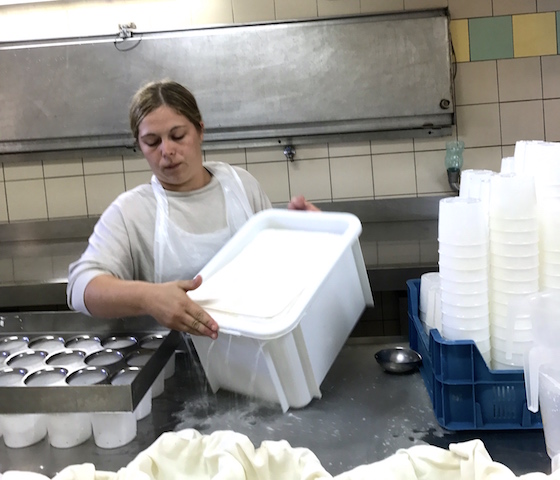
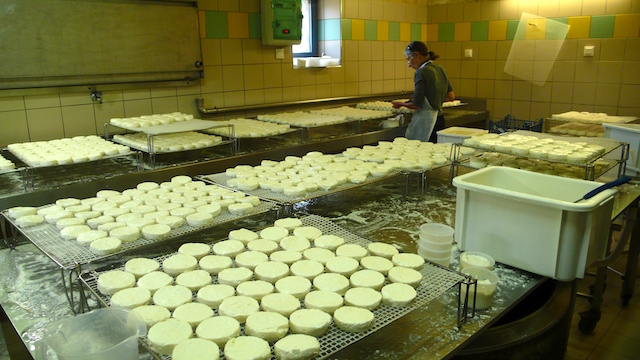
We covered our shoes with paper slippers before entering the small fromagerie across from the barn.  Milk is piped in here from a raised walkway in the barn where the goats are mechanically milked twice a day.  Milk is divided among plastic containers and a coagulant is added.  Within hours milk curds separate from the liquid whey which is carefully drained off before the solids are ladled into molds.


The molds are minutely porous and whey continues to drain.  Within two days the curds take on the definitive shape of the Pelardon.  Released from their molds the cheese is ready to eat as fresh cheese.  Most rounds will begin the aging process under Mme. and her staff ‘s watchful gaze.


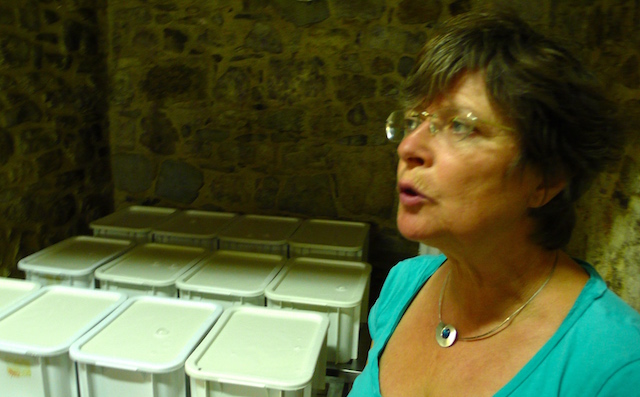
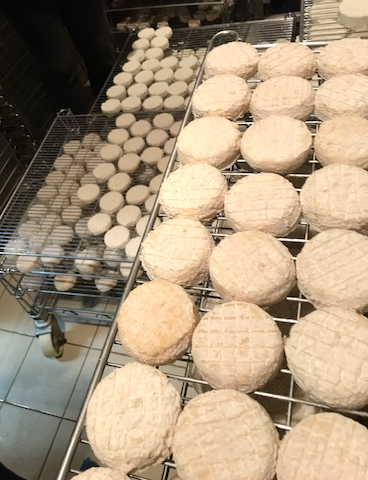
The maturing of goat cheese is easier to comprehend in a fromagerie where there are a full range of examples to observe.   Older cheeses take on a yellow cast and shrink slightly as they are moved back and forth on racks between two small rooms.  One room is humid the other is less so.  Both are cool and smell of the surrounding damp stone walls which must offer some interesting microorganisms of their own to the air.  Mme. Gueit demonstrated textural changes, lifting one then another disk to show us how the cheese first becomes firmer, then later softens and then develops a creamy layer beneath a thin crust. 

I purchased five Pelardons at the farm for us to sample with a glass or wine and bread later that day.  Each exemplified a different stage in the aging process from the freshly drained cheese to a two month old Pelardon that was noticeably shrunken and beginning to show signs of mold on the surface.  Some French “specialists” as Mme. called them prefer this very aged cheese.  Judging by the appearance of the serving plate after our tasting, I would say that my American friends liked the fresher, milder cheeses more than the older examples. 

Visits to artisan producers of local cheese, wine and olive oil in Provence are a special feature of Chez Madelaine's tours in France.  If you would like to see for yourself how goat cheese is made and haven’t yet met a friendly goat, join us on next year’s Provence Odyssey.  Specific information about the September 2018 tour will be available soon.  Enrollment is on a first come, first served basis.