 It used to be easy to recommend restaurants in Paris. A different dining experience could be had at distinct price points. If you’re willing to take out a second mortgage, you could spend it all at one of many Michelin-starred restaurants. Alternatively, any number of classic bistros satisfy most travelers for a quarter of the price. And then there are the inexpensive corner cafes where you can dine on comfort food with the locals and at least one dog (under the table).
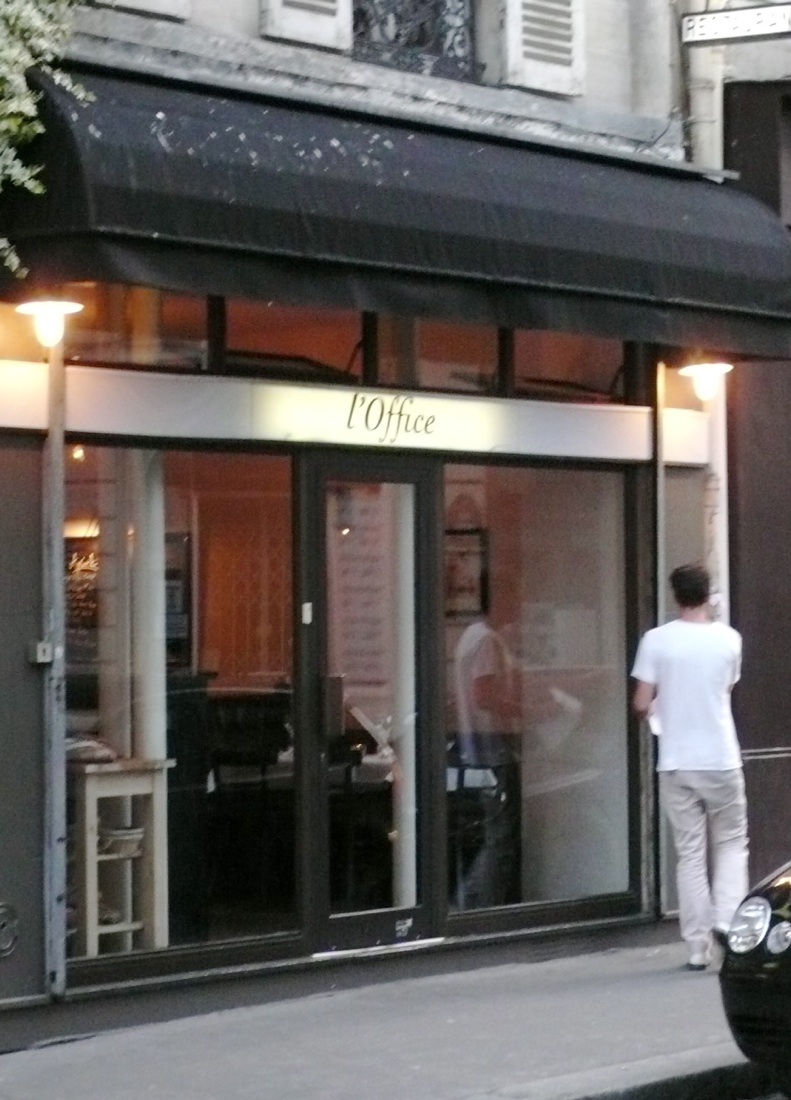
But this hierarchy doesn’t work anymore. A number of innovative bistros have entered the Paris dining scene and shaken up my list of favorites. Their well-trained young chefs have rejected the high-end dining model, where you work your way to the top over many years in a large operation. They don’t trust the quality of the goods that bear the seal of France’s appellation system. They seek out quality ingredients independently. Just how does one recognize one of these new bistros?
Home
I am always hungry to taste a fresh take on a classic recipe. Too often we associate innovative cooking withchefs whose success depends on their preparation of the next awesome dish. But a new idea need not be time consuming work for a kitchen of prep cooks. I’ve made it a priority over the years to show home cooks how to get out of a recipe rut and have fun experimenting.
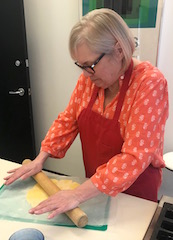
An adventurous group of students gathered in the Chicago's Alliance Française kitchen on a recent Saturday with just this objective in mind. Our goal was a makeover of three classic fruit desserts with the addition of a single bitter ingredient. Which would we add? How would we choose to pair and add them to the recipes? And would they improve on the flavors we already knew and loved? This kind of risk-taking is fun!

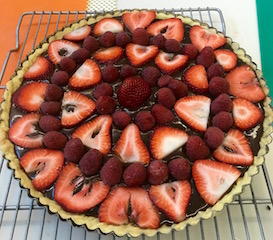
In our first experiment, we inserted a layer of burnt caramel between a pre-baked sweet pastry crust and a decorative layer of fresh strawberries and raspberries. The caramel replaced a traditional vanilla custard filling. Voila, we created an energized Berry Tart with Burnt Caramel.
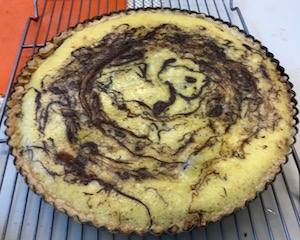
To make comparisons easier, we used the same pastry shell recipe for a Lemon Tart. The bitter element in this dessert was a thin layer of very dark chocolate smoothed between the pre-baked crust and curd. Everything was going according to plan until the very last moment.
As the lemon curd was spooned over the semi-set layer of chocolate, a thin swirl of dark liquid rose up to the surface. On no! We'd created a spoiler alert. The chocolate layer had been outed. Never mind. The abstract pattern created by the drizzle became part of the experiment. I rather liked it.
(How bitter was the chocolate? The group tasted bars with 82% and 88% cocoa respectively and unanimously preferred the one with a higher level of cocoa solids. FYI: Most dark chocolate bars have 40-60% cocoa)
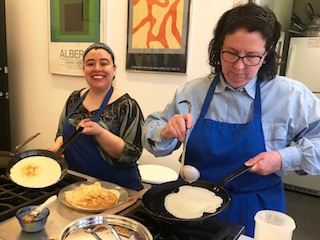
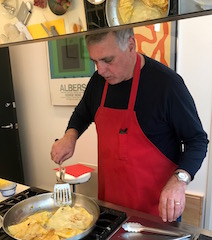
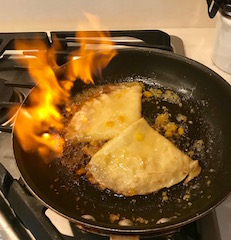
In the third dessert we replaced the time-honored orange butter sauce that accompanies Crêpe Suzette with a tangy Orange Marmalade. We first cooked a small batch of marmalade from Artisanal Preserves that includes the bitter peel. We poured off some not-quite-set marmalade to coat the crêpes and proceeded to gel and jar the remaining marmalade, another five minutes of work.
We completed our three bittersweet fruit desserts with ample time to sit down together and enjoy them. That's one of the pleasures of working together as a class. But, a lunch composed of three stand-alone desserts? Now that was challenging! We managed with the help of a flute of Cremant d’Alsace.
Before they left, I asked everyone to vote for their favorite. The winner was.....(drum roll).... the crêpes flamed with bitter Orange Marmalade!! My mouth is still smiling.
Links to recipes:
Strawberry, Raspberry Tart with Burnt Caramel
Lemon and Bittersweet Chocolate Tart
Crepes Suzette with Bitter Orange Marmalade
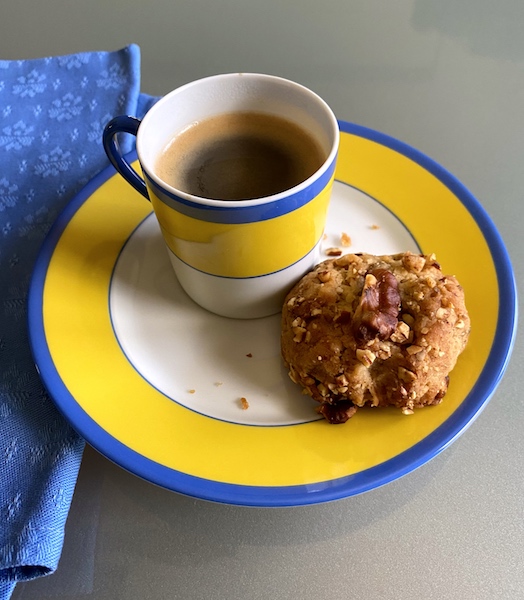
Family recipes are as real as any other kind of inheritance. Perhaps even more so. Our sense of smell is part of the most primitive area in our brain where emotion and memory reside. A food aroma from the past can can take us back to that experience with an immediacy that is breathtaking and indelible. In a time when our path to the future is uncertain, these memories of shared experience and family are always there to reassure us.
One look at a recipe from previous generations reminds us how little we cook today by comparison. Recipes used to be written in a telegraphic style as if they were in code. Directions would often end with a phrase like, ‘cook it until it’s done’, as if there were a common understanding of what ‘done’ was. Brevity may have also exemplified a laissez-faire attitude. Go ahead and cook a pork chop until it is as tough as shoe leather if that suits you. Recipes today are written in a narrative manner or presented as a highly edited one minute video on TicTok.
Julia Child gets my vote for having revolutionized recipe writing 60 years ago with her ambitious two volumes of Mastering the Art of French Cooking. With dogged thoroughness she held the hands of Amercan cooks and took us step-by-step through the cuisine of the upper-middle-class in France in the 1950’s. French cooking on both sides of the Atlantic has evolved past Julia’s traditional Cordon Bleu style, but her systematic treatment of French techniques, one that illuminates its inherent logic, remains her enduring legacy.
A cook can take some liberty when adapting the ingredients and preparation of a family recipe to modern circumstances as long as it smells and tastes as they remember. Standard practices for preparing pastry, cookie dough and cake batter make baking from old or vague recipes easier than might be expected. The exception to these generalizations is baking bread with yeast because this leavener is a living, single-cell fungus whose comfort has to be taken into consideration. It's difficult to master a heirloom bread recipe without some knowledge of baking chemistry. Fortunately, this information came into the public domain as recently as the 1980’s with the publication of books by professional bakers and obsessed amateur bakers.
My own success preparing family recipes has been mixed. In an 2012 post I detailed my discovery and preparation of a 115 year-old coffee cake recipe my husband’s great grandmother contributed to her church's cookbook. The recipe consists of a four line list of ingredients. There are no directions. I succeeded in preparing it by summoning my ‘inner Julia’ and following the basic procedures for baking with chemical leaveners (baking powder).
I have had less success creating recipes to secure a treasured memory. I told cooking students over the years that I had created a lemon dessert to conjure up the thrill of my first lobster dinner at the home of a distant cousin in Maine. Finally, a student asked, “Why didn’t you just call her up and ask for the recipe?” In truth, this obvious solution had never crossed my mind. My cousin's lemon dessert was the perfect way to end the meal, but not tasty enough to capture the totality of the experience. My own recipe is souvenir of that amazing day. Could it become a family recipe? That's for the next generation to decide.
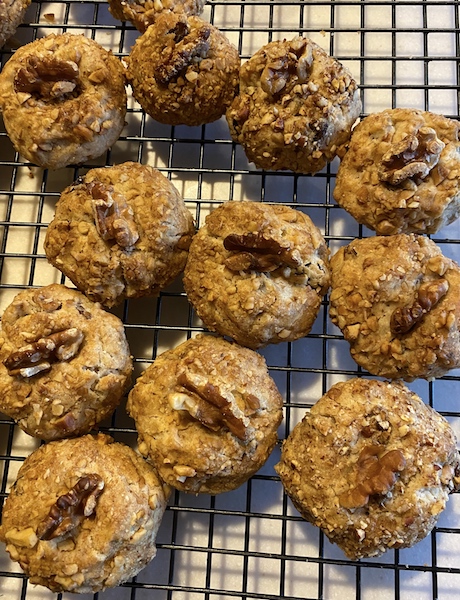
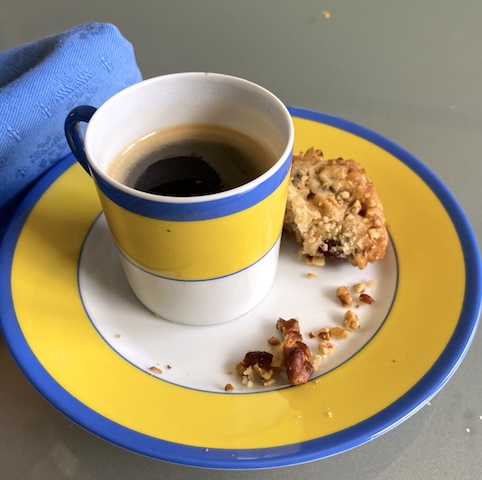
Blog reader Elise Glickman sent in a recipe for her Russian grandmother's (bobie) ‘famous’ walnut cookies.. She fondly remembers watching her preparing them. The recipe is easy to assemble by hand or food processor. It produces cookies that are dense, cake-like cushions, with just a little sugar, lots of chopped walnuts and a hint of cinnamon. The only assembly note I would add is that you firmly insert the decorative piece of walnut into the cookie dough before bakIng, otherwise it may become detached after baking.
BOBIE’S FAMOUS RUSSIAN-STYLE COOKIES
Ingredients for 2 1/2 dozen cookies
2 cups walnut halves
1/2 tablespoon ground cinnamon
3 large eggs
1 cup corn oil
1 cup golden raisins (preferred)
1/2 cup sugar
1 teaspoon baking powder
3 cups unbleached flour
Preheat the oven to 350 degrees. Cut 16 large walnut halves in half, and reserve for decoration. Finely chop the remaining nuts by hand or with pulsing action in the work bowl of a food processor. Mix or pulse in ground cinnamon, and reserve.
Beat the eggs thoroughly in a mixing bowl. Stir in the oil, raisins, sugar and 3/4 cup of the chopped nuts and cinnamon mixture. Sift the flour and baking powder over the wet ingredients and stir into a dough that is cohesive but not sticky.
Form pieces of dough into 1” rounds. Roll the balls in the remaining ground nuts and cinnamon. Firmly insert a halved walnut piece into the center of each ball, gently flattening it into a cushion, and place on a cookie sheet. Bake for 20 minutes. Cool on a rack. Store in tightly covered container or freeze.
The first sign of reopening in my town was the emergence of white pole tents in unexpected places. They popped up like mushrooms in parking lots and green spaces next to local restaurants to protect patrons who feel safe dining six feet apart. If you feel the need to break out but aren’t ready to dine out, try doing it virtually. Come into the kitchen with me and make your escape by creating a new taste experience.
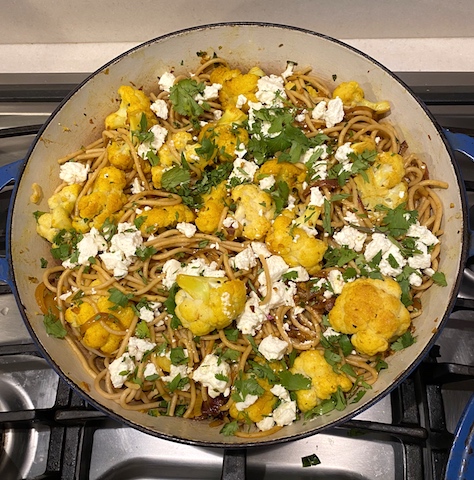
Just this week, I took a virtual cooking trip by turning a pasta recipe from Chez Panisse in Berkeley, CA into one a home cook near New Delhi might prepare. I left the basic moves unchanged: the pasta and cauliflower were cooked al dente, tossed together and sprinkled with a soft cheese. The cultural divide showed up as soon as the pan hit the cooktop.
Instead of sautéing the cauliflower florets to a slightly caramelized finish à la française, I soaked them in cold water and steamed them which preserved their mustard aroma. Rather than adding a pinch of red pepper flakes called for in the Chez Panisse recipe, I added as many chopped green chilis as my palate could comfortably tolerate. The finish was decidedly different too.
The French recipe aimed at balance with the addition of lemon juice and crunchy walnuts to complement the cauliflower. I added ginger, garlic and turmeric which are staples in a north Indian kitchen to mollify the heat of the chilis. This combination had the effect of sweetening the taste of cauliflower. The flavor in each bite was different and inviting.
My fanciful culinary flight was inspired by the cooks I observed in private homes on a recent “real food” trip through Rajasthan and in Goa, India. You need not have travelled that distance to experience a break out this summer. Come travel with me to Morocco via Zoom on Saturday, June 20 when I’ll prepare a fish tagine with charmoula and a skillet bread.
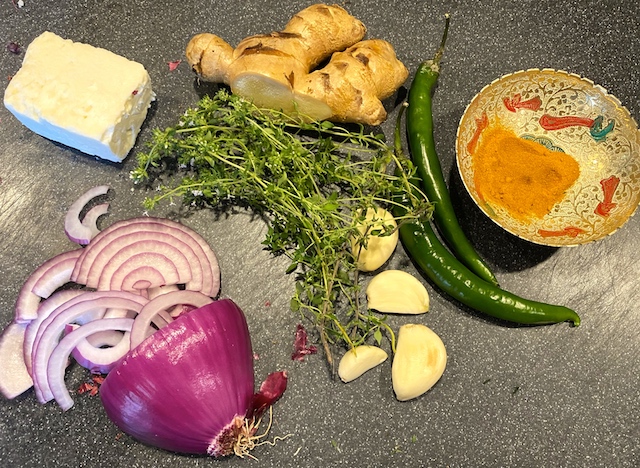
BREAKOUT PASTA WITH CAULIFLOWER
Ingredients for 4 servings:
1 head cauliflower, cored, separated into florets
1/2 pound whole wheat spaghetti
2 tablespoons Canola oil
1 red onion, halved, peeled, thinly sliced
2 tablespoons fresh ginger root, peeled and finely chopped
2 tablespoons garlic, peeled and finely chopped
1 teaspoon ground turmeric
2 + long green chilis, finely chopped
3/4 teaspoon sea salt
2 teaspoons fresh thyme, minced or 1 teaspoon dried thyme
2 - 3 ounces feta cheese
3 tablespoons cilantro leaves, chopped
Soak the cauliflower florets in cold water while preparing the other ingredients.
Heat 3 quarts of water to simmer with 2 tablespoons salt and cook pasta al dente, about 10 minutes. Drain all but the last 1/2 cup water and reserve with the pasta, tossing occasionally to keep the pasta moist.
Heat the oil in a large, deep skillet. Cook the onion slices over medium heat until they begin to wilt, about 3 minutes. Stir in the ginger and garlic pieces for a minute. Add dried thyme. Mix in the turmeric for 1 minute. Drain the cauliflower and add curds to the pan along with the green chilis. Stir for 1 minute, add the salt, cover the pan and cook over medium low heat until the curds are just tender, 5 - 7 minutes. Add fresh thyme. Fold in the reserved pasta, water and briefly reheat in the skillet. Add more salt if needed. Crumble the feta over the pasta and sprinkle on the cilantro.
Note #1: In India a cook would add 1 teaspoon ajwain seeds rather than thyme.
Note #2: The French version of this recipe is in Chez Panisse Vegetables by Alice Waters, page 84.
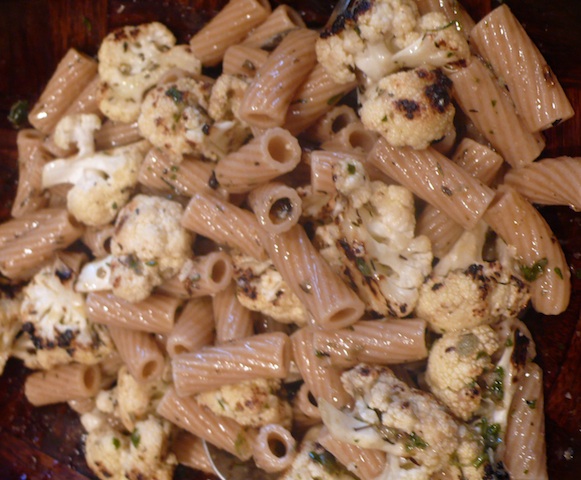
GRILLED CAULIFLOWER WITH PENNE PASTA
(click on title for link to recipe)
Why was I buying cauliflower in the middle of May? Yes, they were on sale at huge savings, but the purist in me felt I was rushing the season. What would I do with these unblemished, pearly white beauties? I simply pretended it was summer!