A VERY CRANBERRY CHRISTMAS

CranChrist2

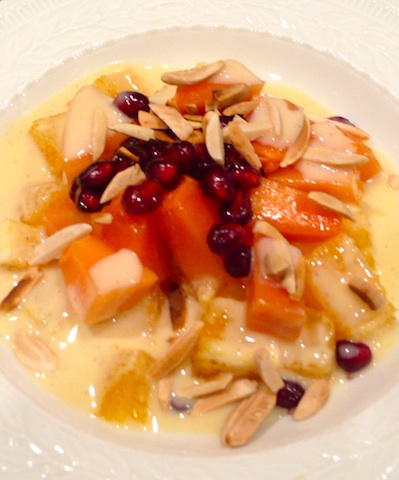
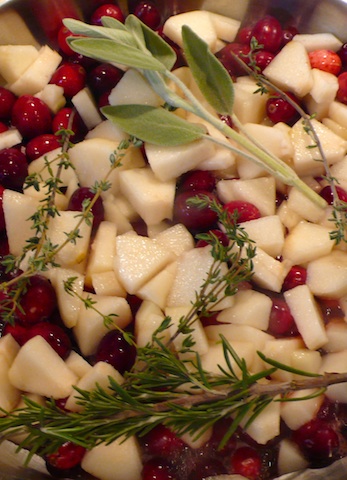
Cranberry Pear Compote with Fresh Herbs (link)

The humble cranberry, once just a canned Thanksgiving staple, recently morphed into a sexy 'superfruit' and is fast becoming a victim of its own success. This year's crop has flooded the marketplace. You are helping to reduce the surplus every time you drink cranberry juice, snack on Craisins, sip a cranberry martini or dose your immune system with pharmaceutical grade cranberry powder. But, as one grower put it, "It's time to get more creative."

Let me put the problem in perspective. Our neighbor to the north in Wisconsin produced 60% of the country's supply this year, a whopping 600 million pounds. It's the largest crop ever, and we are likely to consume just 20% of it between Thanksgiving and Christmas. Witness the  bargain-priced bags of cranberries piled high in supermarket showcases.
CranChrist1

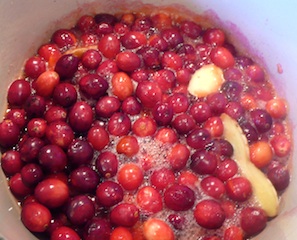
Cranberry Ginger Jam (link)

Here's what you can do to help.  First, stock your freezer with bags of fresh cranberries. Then go to the recipe archive at www.chezm.com and type 'cranberries' in the search box. No fewer than 24 recipes will appear! The jam, compote and sauce recipes call for fresh berries. (Bread, cookie and salad recipes use the dried ones.) There's sure to be a least one that you can work into a holiday meal at your house.

What am I doing to take advantage of the great cranberry glut?  Every year I concoct a new cranberry jam recipe and fill small quarter-pint preserving jars to give as gifts. This year's flavor combines cranberries, Granny Smith apples, fresh ginger slices and, of course, a fair amount of sugar.
CranChrist3

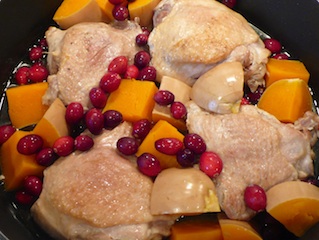
Turkey Thighs with Butternut Squash and Fresh Cranberries (link)

 For the more adventurous I recommend going off-recipe and simply strewing fresh cranberries into simmering poultry and pork dishes. Tart cranberries have a refreshing way of accentuating the natural sweetness in these meats. If this sounds a bit primitive, it is.  I'm channeling native Americans who pounded cranberries to wild game meats and fat to make pemmican, our nation's first energy bar.

Go wild with cranberries this year. Have a berry, berry Christmas!


A YARD TO TABLE STORY


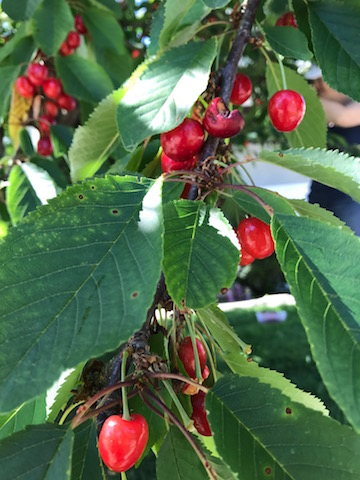
 Chances are slim that you will someday buy a house with its own cherry tree. How many of us have even asked a realtor to find us a house with a fruit tree in the front yard?  I guess we were just lucky.  

To be honest, I had mixed feelings when I first appraised our unexpected bonus last August.  This cherry tree had grown up as wild as an unrestrained child.  Branches sprouted at odd angles and tangled in the electric lines.  I was relieved to see an abundance of last season’s shrunken, unpicked cherries on all these willful boughs.  This hopeful sign dimmed when the tree unexpectedly shed its leaves well ahead of the others leaving a bristling silhouette in an otherwise green landscape.  I was embarrassed for it.

To my relief our cherry tree came to life early this spring in a profusion of leaves and blossoms.  Nature cleverly saw to it that each delicate blossom quietly and efficiently pollinated itself.  It was only when the small green peas that replaced the flowers matured two weeks later into bright red fruit did everyone suddenly notice the bountiful cherry tree in our front yard. 

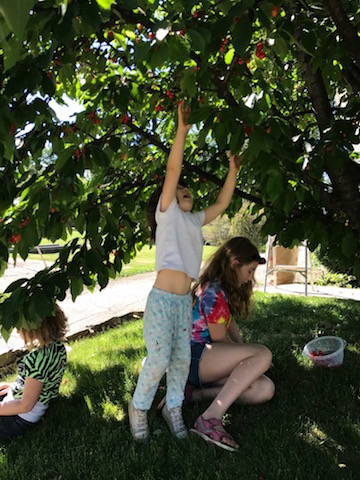
 I had no trouble recruiting a team of underage cherry pickers in the form of our granddaughters for whom this sort of labor is fun.   I’m guessing they ate as many of the sweet fruits as they picked.  I didn’t complain, and neither did they when it came time to pit the cherries by hand for their individual cherry tarts. (That recipe is still classified.  Another time.)

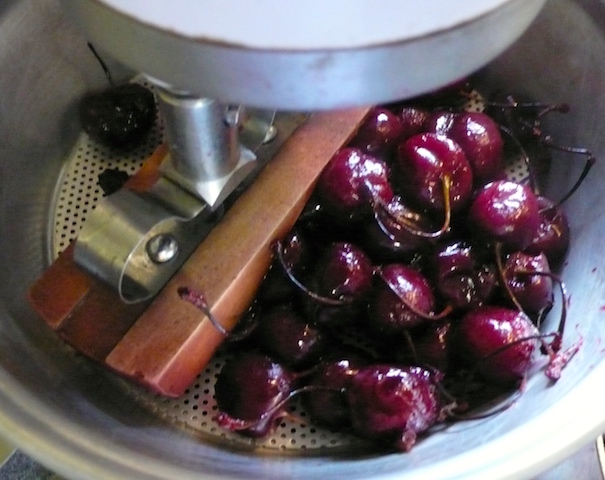
This is the point where I direct you to a cherry jam recipe in my newly reprinted cookbook Artisanal Preserves.  Except there are only recipes for sour cherries in the book not sweet ones.  Never mind.  I went ahead and created a new recipe.  I will walk you through the process.

All cherries have very little pectin, the component in fruit that creates a gel when sugar is added.  Rather than add a high pectin fruit to the cherry puree as I did in the sour cherry recipes, I took a simpler route.  I made a jam of thicken cherry pulp and sugar.

There still is the question of how much sugar to add and how long to cook the jam.   I knew that if I were making a fruit gel, I would add the same volume sugar as fruit.  Since these cherries are already sweet, I guesstimated they would need only half that much sugar.  It's also true that appearance and consistency of jam determines the cooking time.  It’s differs slightly each time. Instead of giving an exact length of time, I describe how to test the jam’s thickness in the recipe.  

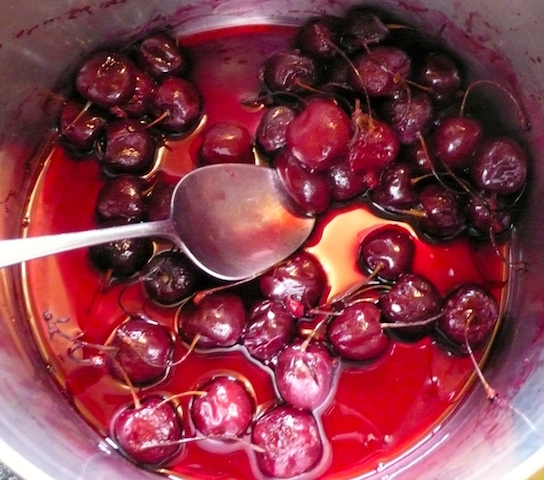
My first batch of cherry jam was tasty but not quite as interesting as I had hoped.  I added a small amount of almond extract the second time and was very satisfied.  Click on the title under the photo for the link to the recipe.  Cherries are still in the grocery and reasonably priced at the end of the season.  Enjoy!

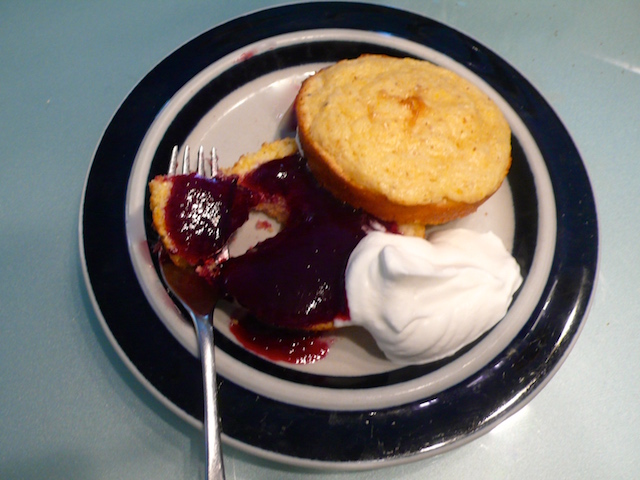
 Sweet Cherry Jam with whipped cream and a Cornmeal Muffin (Artisanal Preserves, pg. 164)

Sweet Cherry Jam Recipe

Purchase your copy of Artisanal Preserves

ABC'S OF FRENCH COOKING

CA2

There’s no better time than the first of the year to review the ABC's of French cooking.  Join me on this leisurely stroll through a culinary alphabet. We’ll go letter by letter, the same way I practice the French alphabet with my granddaughters. To help them remember how to pronounce each letter, we pair it with a word we use every day. With our culinary alphabet, I will use recipes instead, easy ones.

ALL HAIL, KALE!

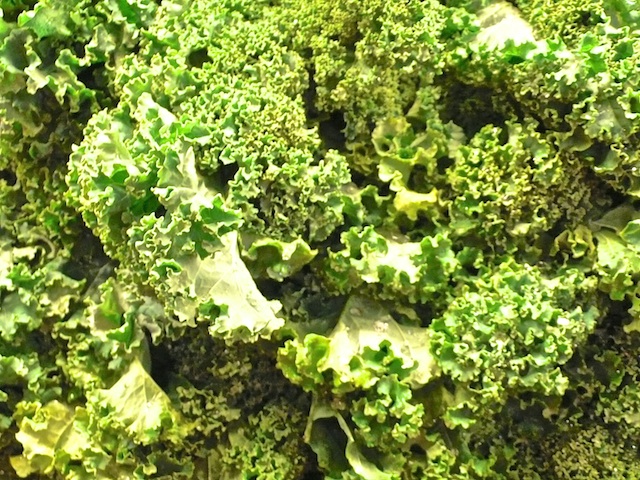
GKale

I must have been a forager in a previous lifetime.  Why else do I reach for a bundle of dark, crinkled kale leaves in the grocery?  Its cousin, that smooth, glossy head of cabbage, is a more obvious choice for soups and stews.  

An Aha Moment


Few things are more exciting than the discovery of a new dish.  It’s especially gratifying to find you can do it by simply opening the refrigerator and pulling out a jar.  Wait!  This is not an advertisement.  I want to tell you about my recent culinary leap of faith.  

It happened when I realized that mashed potatoes and preserved lemons are meant for each other.  Now I want to spread the word. Am I making too much of this discovery?  Not if you are a fan, as I am, of renowned gastronome Jean Anthelme Brillat-Savarin*: “The discovery of a new dish confers more happiness on humanity, than the discovery of a new star.”   

It’s common knowledge that lemons confer a refreshing sour, brightness and fresh aroma to all manner of dishes, but less well-known is the intense, super-charged flavor of lemons after they have fermented in their briny juice.  Preserved lemon is an easy to assemble, low-maintenance condiment.  There’s also romantic appeal in the knowledge that preserving lemons is an ancient practice in countries along the route of the spice trade from Asia to North Africa.  


Now for a confession.  I have kept preserved lemon in my refrigerator for years without recognizing their full potential.  After demonstrating the process in a Moroccan cooking class, I’d let a jar ripen at room temperature for a month and then put it in the refrigerator as I moved on to another cooking subject.  I never stopped long enough to explore ways to integrate this amazing condiment into my daily cooking routine.

That pattern abruptly changed a few days ago after I read an email from a recent class member.  She had gone home and repeated the process of blanching, quartering, salting and packing lemons in a jar with juice. She was now waiting impatiently for them to ripen and wanted ideas on how and when to use them.

With no response readily at hand, I went on to the next email, one from The New York Times containing a weekly list of recipe suggestions.  And there it was, a recipe for Lemon Mashed Potatoes.  As I said, it was serendipity.


The Times recipe was an elaborate rendition of mashed potatoes from a New York celebrity chef.   The potatoes were dressed in a Meyer lemon and mustard vinaigrette with lemon zest, creme fraiche and three herbs.  It seemed like too many ingredients for mashed potatoes.  That’s when my aha moment kicked in. 

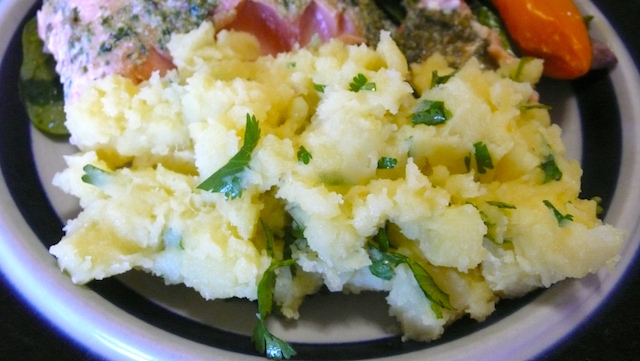
I stripped the recipe of all ingredients except the potatoes and replaced them with diced preserved lemon peel, some of its juices, a little olive oil and a cilantro garnish.  The Yukon gold potatoes were the perfect, neutral foil for the briny lemons.   Not only were the flavors addictive, it made a exceptionally good side dish for the hanger steak I had prepared.  Last evening I added brined lemon juice to braised kale.  I’m on a roll.  You’re welcome to join me.   

* Jean Anthelme Brillat-Savarin, an 18th century lawyer, politician and gastronome is best know for having written: “Tell me what you eat, and I will tell you what you are.”

Recipe Links: 

Half-Mashed Lemon Potatoes 

Recipe for Preserved Lemons 

Blogs: 

Loving Lemons