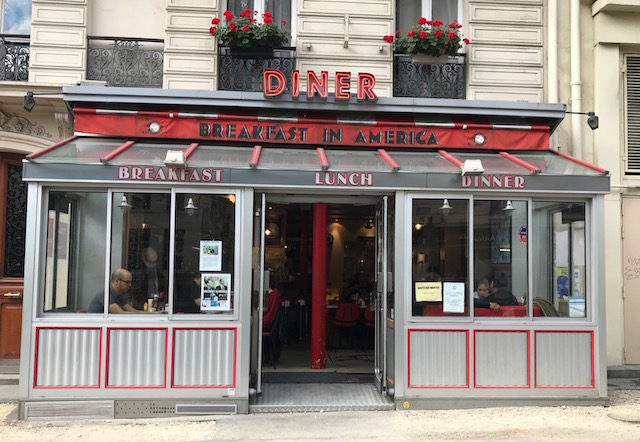
THE TALE OF TWO DINERS (IN PARIS)

It’s a familiar story.  An American comes to Paris, falls in love with the city and looks for a way to stay permanently.  What are the job opportunities?  Teach water skiing on the Seine?  Open a miniature golf course in the Bois de Boulogne?   While it’s true that American and French cultures mix about as well as oil and water, on one subject they are in total agreement: they both love to eat.

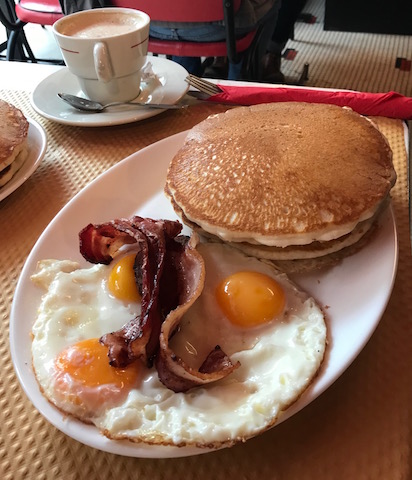
Craig Carlson was caught in just such a dilemma when he finish a television directing job in Paris a couple of decades ago.  He had spent a year in Paris as a student before becoming a Hollywood screenwriter, and he wasn't ready to return to the States.   Craig had his epiphany when he was served a plate of bacon, eggs and pancakes back in LA. He realized that a big American breakfast was the one thing he had missed when he was living in Paris.  He vowed to open a diner in Paris that served his favorite meal.
 Craig then began a process of searching for investors,negotiating with French contractors and sourcing the key ingredients that would make his diner credible: real New York Bagels, rasher bacon and Vermont Maple Syrup.  He describes the torturous process of creating Breakfast in America in his bestselling book Pancakes for Breakfast.   BIA opened in 2003, and there is now a second location across the river in Marais neighborhood.  

I met Craig and his French partner when they visited Chicago’s Read It And Eat bookstore on a promotional book tour in the Spring and made a note to stop by the diner when I was in Paris in September.  To my great surprise, the  studio apartment I rented in the Latin Quarter facing the rue des Ecoles was directly across the street from the original BIA.  I'm not  making this up!
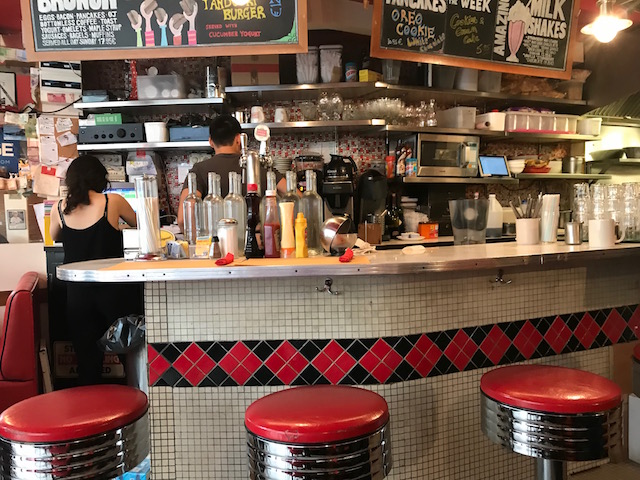
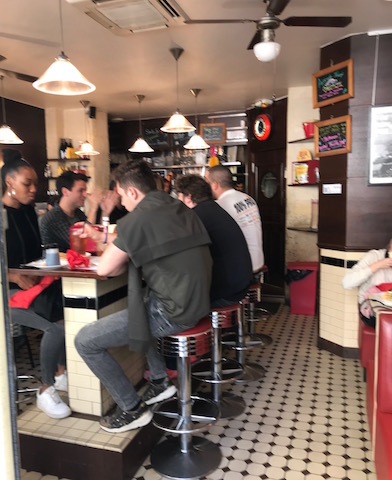
 Both Breakfast in America locations have the look and feel of a 1950’s road diner with red leatherette seating upholstery, formica tabletops, black and white tile floors and weak coffee served in a  mug with a spoon in it.  (Excellent espresso is also available.) The waitstaff of young bilingual Americans is midwestern friendly.  The food is what you would be served at a rural diner.  The eggs I ordered were runny in the center, the bacon slices were crisp and the pancakes were fluffy.

I don’t want to leave you with the impression that BIA is just a breakfast place or a refuge for homesick Americans.  Both locations are open all day long.  I remember seeing the lights on across the rue des Ecoles after 10pm. The menu includes every dish you’ve ever ordered in a diner, and then some.

At both BIAs there appeared to be a close to even mix of Americans and French. How could I tell the difference at a distance?  The Americans picked up their burgers in their hands to eat while the French carefully cut theirs with knife and fork.  In other words, everyone ate as if they were at home.  
THE UNSINKABLE SOUFFLE

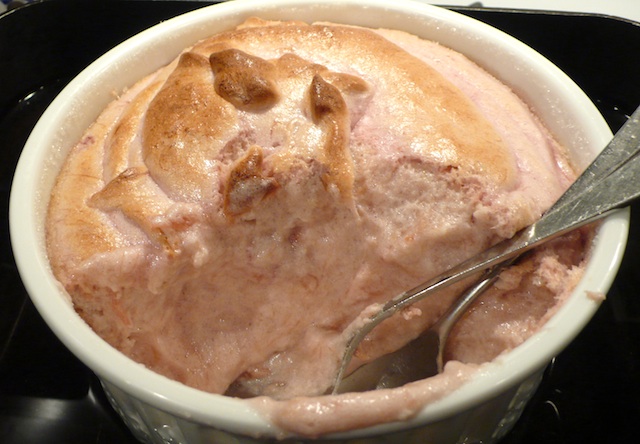
 Souffle1

I’m faithful to the rules of French cooking with one exception.  When it comes to le soufflé, I flaunt technique and experiment incessantly with the mysteries of the beaten egg white.  I'm determined to make it a light, unsinkable dish, one that even the most timid cook can prepare with confidence.  After all, how hard can that be?   A soufflé is only eggs!

Baking and serving a soufflé to guests should not require nerves of steel.  It can be trained to wait before being baked, to stay puffed after leaving the oven, and to rise again when reheated.  What can be easier than training a pet?  Let me introduce you to the le Souffle à la Suiss

The difference between the traditional soufflé and the Swiss variety is one single egg white.  The latter contains an equal number of yolks as whites.  It is also baked in a hot water bath where the heat penetrates slowly and thoroughly.  The rise is not as high and spectacular, but it doesn't fall, it simply settles into a light pudding.  

I've taken this formula one step further by eliminating the heavy bechamel sauce that serves as a base for the traditional soufflé.  There is no roux blended with hot milk supporting the flavor ingredient.  I use cornstarch instead.  For fruit souffles, the cornstarch is folded into the whites and not heated beforehand.

Rhubarb souffle is this month's flavor at our house  Rhubarb's sturdy, dark red stalks make it a refreshing sweet/sour delight.    Click on the link below to retrieve this recipe from the Chez Madelaine Recipe Archive on my website chezm.com.  

Enjoy your mastery of souffle magic.  Cape not included.

Link to Rhubarb Soufflé

Souffle2


THE VERRINE: WHEN LESS IS MORE


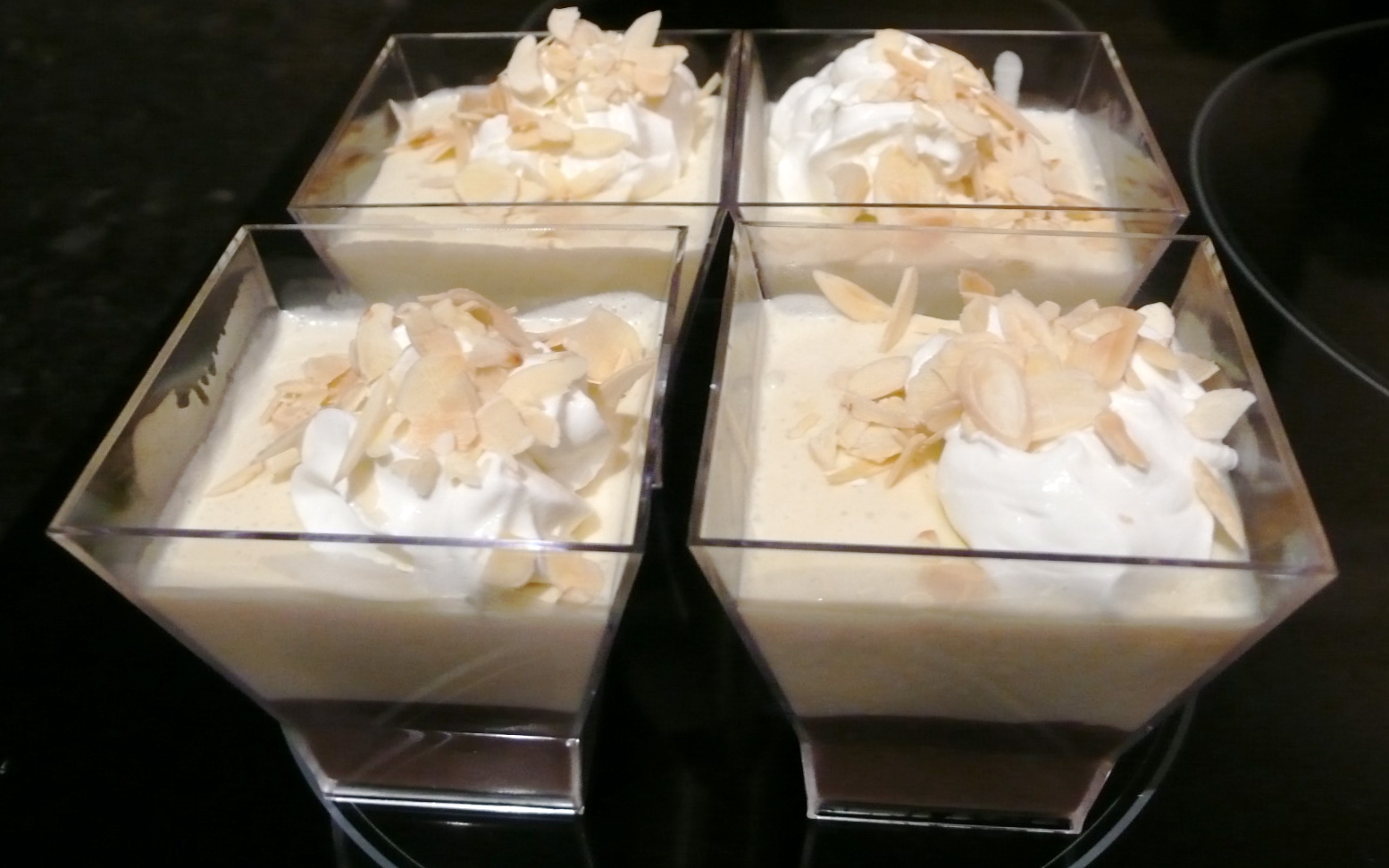
l1020928

What is the guiding principle of home entertaining in France today?  Three words: “less is more”.   It’s a style best typified by the popularity of the verrine ver een”, a small, delectable portion served in a small clear glass container.  A verrine can be as simple as a soup passed before dinner or a formal layered dessert presented as a finale.  Parisians  have been using them to shorten prep time for a decade.  Why hasn’t this trend spread to our side of the Atlantic?


TOMATO PICKLES

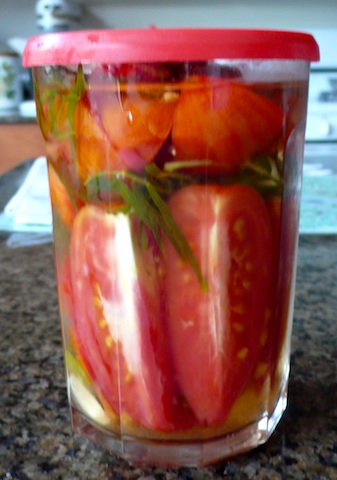
PTomatoes3


I often wonder why I keep on making preserves. No one needs to act like a busy ant storing food for the winter rather than risk starvation like their neighbor the grasshopper who sings all summer.  Aesop's fable, it would seem, has lost its moral imperative. These days industrious ants stock up at CostCo, and grasshoppers, today's working poor, use food stamps.  Both ends of the spectrum are enabled by giant food companies whose processed products last, despite sell-by dates, virtually forever.

Tour Comments

Tour Comments