SEEDS OF CIVILIZATION

Nuts have nourished man and beast since prehistoric times. Their importance is evident in the many metaphors we use to describe everything from human anatomy to our state of mind.  Males are born with “nuts”; a problem can be  “a hard nut to crack”; it could even drive us “nuts”.  

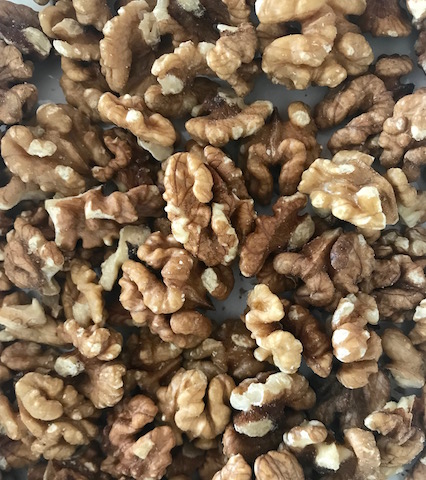
 If we had a real nut for every time we used the word, our nutrition scores would soar.  Unfortunately for us, nuts are too often a culinary afterthought relegated to trail mix and cereal.  Who would guess remnants of walnut shells turn up in Neolithic fire pits more often than animal bones? 
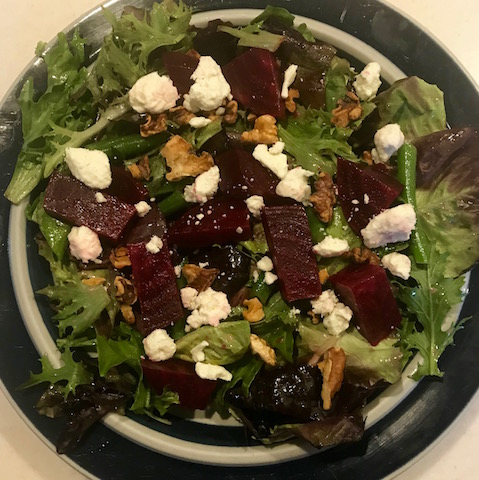
 

Salad of beets, green beans, goat cheese with walnut oil dressing 

Europeans get it.  Walnuts in the shell are prominently displayed with produce in French markets.  They stay fresh and tasty in their original packaging.  We are more likely to see them like this when they are harvested in late November. I remember watching my Hungarian father crack open and pick out the walnut meat between sips of Tokay wine at the end of holiday meals.   Our festive white tablecloth littered with walnut shells was the envy of any squirrel.

It turns out that that the ancient walnut is the one ingredient I can purchase as easily in suburban Chicago as in southwest France, more often as scuffed halves than in the shell.  I’ve made a point of finding more uses for walnuts this summer in preparation for my tour in the Dordogne this September.
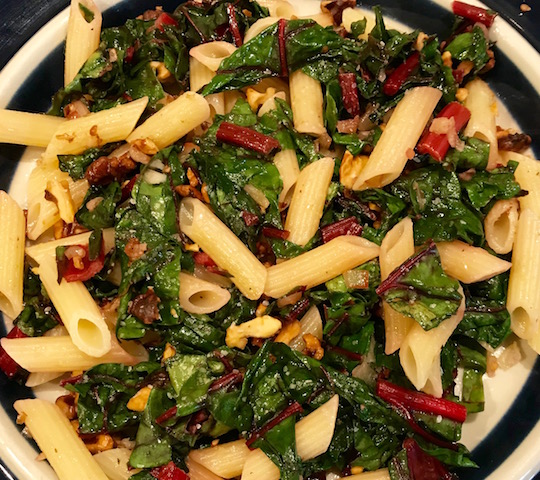
     Penne pasta with red onions, chard and walnuts. 

Once walnuts come onto your culinary radar, their addition to salads, casseroles. breads and desserts will quickly multiply.  For starters, I've added links to favorite walnut recipes on my website, or you can add them to your existing repertoire.  Simply chop, scatter or fold pieces into a finished dish.  Drizzle on a little walnut oil for emphasis.  Voila! 

 Here are some tips to get the best results with walnuts.

 Look for unbroken walnut halves.  It’s usually a sign of quality.

 Toast shelled nuts in a 350 degree oven for 10 minutes or until they are fragrant.  Their aroma and texture are revived and will remain so even in storage. Walnuts purchased in the shell do not require roasting.

 Store shelled walnuts tightly sealed in the freezer between uses to avoid their oil from becoming rancid.  Keep all nut oils in the refrigerator between uses. 

Add a drizzle of walnut oil to heighten the presence of walnuts in dressings, sauces and as a garnish.

RECIPE LINKS

PENNE PASTA WITH SWISS CHARD AND WALNUTS

BEET, GOAT CHEESE AND GREEN BEAN SALAD WITH WALNUT VINAIGRETTE

HARVEST SEASON WALNUT CAKE WITH WALNUT SAUCE

NO-KNEAD CRANBERRY WALNUT BOULE
SALAD WITH CHEESE: MIXED GREENS PEARS AND WALNUTS

TOASTED ROQUEFORT CAKE WITH WALNUTS

SOUP SEASON

Fennel soup 3

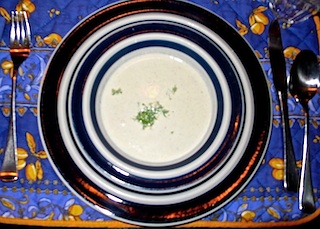
Falling temperatures and shorter days make a comforting bowl of vegetable soup irresistably appealing.  But you know me.  Not just any soup recipe will do.  So I went searching recently for a Fennel Soup that met my criteria: easy and quick with fresh ingredients.

SPRING ARRIVES IN A CLOVE OF GARLIC


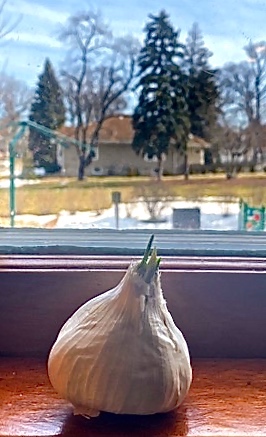
Three green blades sprouted from a head of garlic on my kitchen counter in early February as snow covered the ground outside my window.   Soon green shoots appeared at the base of all onions that crossed my cutting board. How did these bulbs know it was time to grow into new plants?

The discovery that all plants contain a molecular clock that triggers their growth was made almost a century ago. Research began in Japan in the 1930's as a means to improve rice production. The stems of rice plants were collapsing before they set seed seriously limiting crop yields. Scientists found five hormones that work in tandem to stimulate and guide the growth of plants from dormancy through flowering.

My sprouting head of garlic had spent time in cool darkness before coming to market. During that time a molecular acid called gibberellin was gathering strength. In the warmth of my kitchen this hormone broke the garlic’s dormancy and set the bulb’s cells in motion to produce the next generation. The next question.  Could gibberellin also initiate renewal in the human microbiome?

A few quick internet searches led me to ads for over-the-counter garlic supplements with added gibberellin and hormone-fortified sprays for plants. As many as 130 different sources of gibberellin acid have now been synthesized. None were as appealing as a natural source. Was there a hack for getting a gibberellin rush from garlic?


One would have to eat a raw clove of garlic, whole, to avoid the stink that is released once garlic's sulfur cells are activated by chewing.  And the odor remains on ones breath as garlic slowly metabolizes and is vaporized in the lungs. I'm impressed by garlic's many health benefits, but I'd rather not make social distancing a way of life.

In the hands of a savvy cook, garlic will morph from it's raw Dr. Jekyll personality to a sweet Mr Hyde in minutes. Chopped garlic’s offensive sulfur compounds gradually disappear in a hot skillet leaving the carbohydrates free to break down and sweeten, up to a point.  Cooked a second too long, these sugars turn bitter and the garlic becomes inedible. Spoiler alert: There's no proof that gibberellin's magical powers can survive the heat of an oven or skillet.

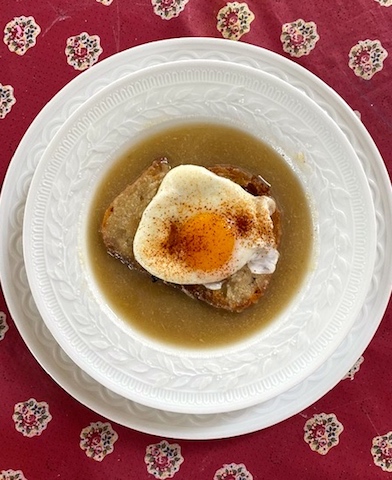
So, I console myself with a steaming bowl of soup made with the simmered whole cloves of four heads of garlic. Braised and pureed garlic is sweet and restorative.  The addition of a poached egg and toast makes it a satisfying lunch and leaves me feeling fortified for the coming season.


GARLIC SOUP

Ingredients for 4 servings:

4 heads fresh garlic, peeled or unpeeled

1 bunch of fresh thyme (6-8 stems)

1 quart vegetable or chicken broth or water

Juice of 1 lemon

Kosher salt and freshly ground pepper

4 slices country bread, toasted

4 poached eggs

Garnish: smoked Spanish paprika

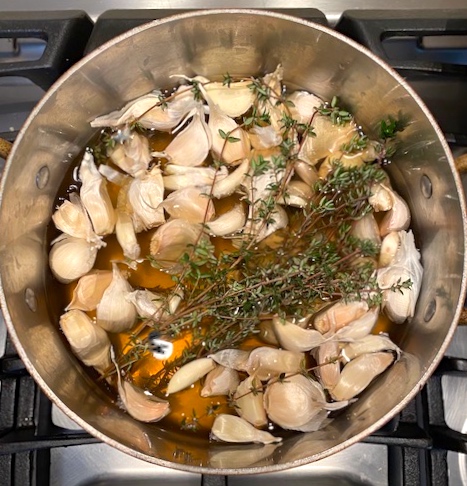
Break the heads of garlic into cloves, discarding the loose wrappings. Place cloves, peeled or unpeeled, and thyme stems in a saucepan, and cover with stock or water. Bring liquid to a simmer, and cook uncovered at a bare simmer for 15 minutes, or until the cloves are just tender. Remove the thyme stems and the garlic cloves with a slotted spoon. Pass unpeeled cloves through a food mill. Puree the peeled cloves with a cup of garlic broth. Return the garlic to the soup, add the lemon juice, and season to taste with salt and pepper.


Place the toasted bread rounds in the bottom of each soup bowl and pour on the soup. Garnish with a poached egg and sprinkle on paprika. Serve hot with a chilled glass of fruity white wine.


St Patrick's Day a la francaise

StPats2

All Chicago turns green the weekend before St. Patrick's day.  On Saturday morning, a sea of young and old make their way to Michigan Avenue to view a lavish parade.  They sport funny green hats, paint shamrocks on their faces, wear green tee-shirts; a few are already tipsy.  The normally drab Chicago River is dyed green for the occasion.  The Irish are, after all, the city's largest heritage group.

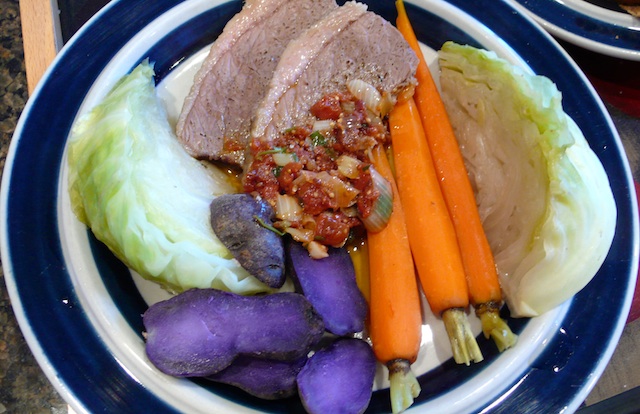
After such a festive build-up, the actual feast day of St Patrick on the 17th is a bit of a let down.  Standard fare is a heaping platter of  corned beef, cabbage and root vegetables.  It's supposed to be humble and comforting but, it doesn't have to be boring.  What this dish needs is a lively sauce à la française.

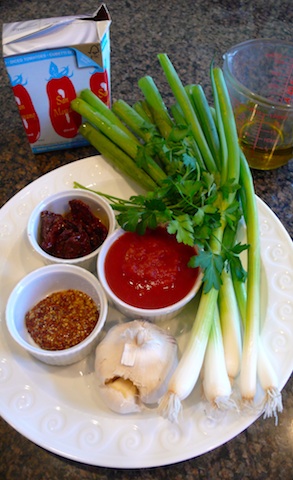
Over the years I've dressed up our family’s meal of corned beef and cabbage with a quick sauce made on the spot with flavors that normally come to the table in condiment bottles.  This year's rendition combines whole grain mustard, canned and sun-dried tomatoes, green onions with a touch of garlic and a bit of chopped parsley.  The ingredients are diced, quickly sauteed and blended into a warm vinaigrette with olive oil.  

StPats1

MUSTARD SAUCE WITH SUN-DRIED TOMATOES

1 bunch green onions, root end trimmed, thinly sliced 1" into the green
1 large clove garlic, minced
2/3 cup olive oil, divided
1/2 cup canned, diced tomatoes
6 sun-dried tomato halves, rinsed and diced
1 tablespoon whole grain mustard
2 tablespoons flat leaf parsley, minced
1 teaspoon sea salt

Heat a thin layer of oil in an 8" skillet.  Saute the onion and garlic pieces over medium heat for one minute.  Add the tomatoes and cook for 2-3 minutes until the juices begin to thicken.  Stir in the dried tomato pieces and the mustard.  Cook another minute of two.  Slowly stir in the remaining olive oil and bring to a simmer.  Fold in the parsley.  Off the heat, season with salt

StPats3 

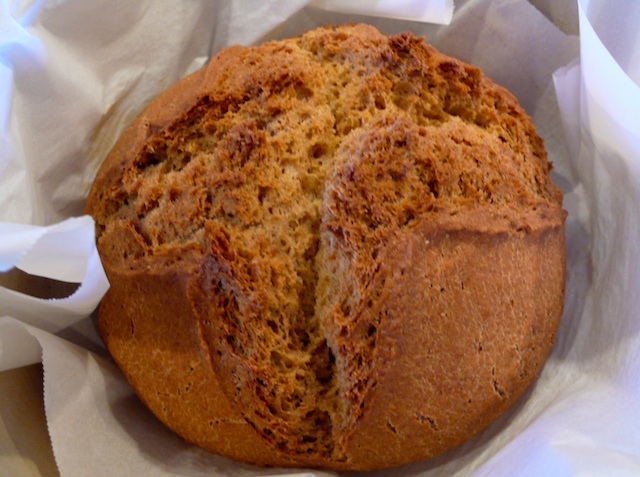
A freshly-baked loaf of Brown Soda Bread is another welcome enhancement to corned beef and cabbage.  It’s chewy crust, cake-like texture and scent of warm grain flatters the boiled vegetables and soaks up the sauce that remains on the plate.  Best of all, you have enough time to bake it while the corned beef is simmering.  Link: Brown Soda Bread


STAY-AT-HOME ASPARAGUS GRAT

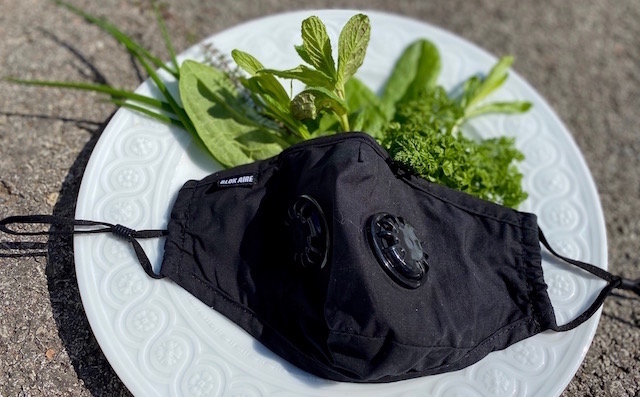
In willful defiance of orders to shelter-in-place, my garden herbs are bolding making an appearance in my garden.  The early arrivals, pictured above are, from left to right, chives, sorrel, tarragon, mint and chervil.  My face mask is an added touch of irony.  I purchased it in December as a precaution before a visit New Delhi little suspecting it would become required outerwear in Chicago three months later.  (I plan to repurpose it for my Darth Vader costume this Halloween.)

The first shoots of perennial herbs in April never fails to brighten my mood and refresh my cooking.  This year’s bonus is a small clump of chervil.  It’s a delicate bi-annual whose lacy leaves and mild anise scent have made it the garnish of choice for French chefs.  My cluster of chervil plants are offspring from last summer’s plant that, against all odds, lived through the midwestern winter snuggled up next to an asphalt driveway.  The watchword of our guide in India comes to mind, “Expect the unexpected!”

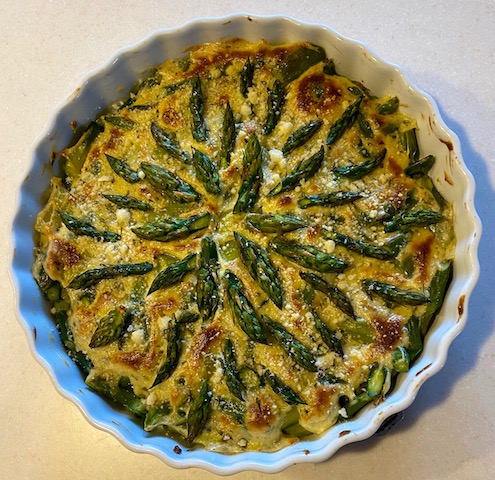
These tender seasonings are destined to lend the nuanced aroma of Spring to an Asparagus Gratin at our family’s Easter dinner.  A little culinary savoir faire is required to retain their scent through the cooking process. Herb leaves and stems hold a limited amount of essential oil which is driven off in the cooking process unless they are added near the end or applied as a garnish.  This gratin recipe employs a clever French alternative.

Finely minced herbs are blended into soft, unsalted butter and allowed to marinate to allow the oils from the herbs to migrate into the butter.  The flavored butter is incorporated into a quick sauce, first by preparing a roux and  then by stirring in asparagus broth.  Blanching the asparagus in water before baking assures the texture of the gratin and minimizes the time it spends in the oven.

The most succulent asparagus stalks are fat as a finger with the firm, closed tips.  (Plump asparagus is the norm in France but the exception here for reasons I do not understand.)  The principle difference between thick and thin is texture.  The skinny asparagus is surprisingly fibrous and too thin to peel.  Thicker, peeled asparagus cut in 1/2” slices is preferred if you want to serve this gratin in wedges rather than spooning it out. 

ASPARAGUS GRATIN

Ingredients for 4-6 servings:

1/4 cup fresh herbs of your choice: parsley, dill, chives, rosemary, tarragon

2 tablespoons unsalted butter at room temperature

1 quart water

1 pound asparagus spears

2 1/2 tablespoons unbleached flour

2 teaspoons fresh lemon juice

1/2 teaspoon sea salt

Freshly ground black pepper, to taste

1 large egg yolk

Garnish: 1/4 cup grated Parmesan cheese

Preheat the oven to 275 degrees.  Generously butter the bottom and sides of an 8” gratin dish.

Herb butter:  Finely mince herb leaves and tender stems. Blend them with the softened butter, preferably the day before making the gratin. 

Asparagus:  Bring the water to a simmer in a deep skillet or 4 qt. saucepan.  Break off and discard the tough ends of the stalks.  Peel the stalks as needed.  Trim off and reserve the asparagus tips.  Cut the remaining stalks into 1/2” pieces and reserve separately. 

Blanch the asparagus tips in the boiling water until just tender.  Remove them with a slotted spoon or strainer and submerge them in ice water briefly to stop the cooking process.  Drain and reserve.  Add the stem pieces to the water, boil until tender, cool in ice water, drain, pat dry and lay them in the bottom of the prepared dish  Continue boiling the cooking water until it reduces to 3/4 cup.  Reserve. 

Sauce:  Melt the herb butter in a saucepan.  Stir in the flour and cook for two minutes stirring steadily.  Pour in the hot asparagus broth and whisk until the sauce is smooth and homogenous.  Off the heat, stir in the lemon juice and season to taste with salt and pepper.  Whisk in the egg yolk.  Spoon the sauce evenly over the asparagus spears.  Lay the asparagus tips over the sauce in a decorative pattern. Bake for until set, 15-20 minutes.  

Garnish:  Just before serving, preheat the broiler and sprinkle the cheese over the surface of the gratin,.  Place the dish 4” from the flame until lightly browned.  Serve immediately.