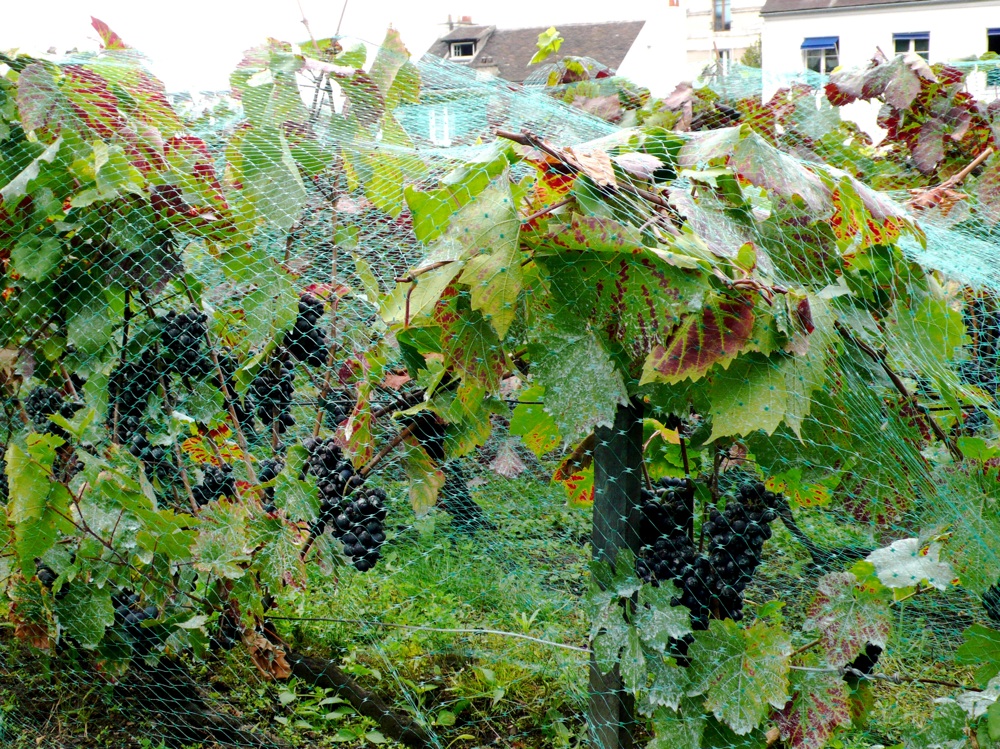
Montmartre is home to the last remaining vineyard in Paris. Every tourist who takes a tour of the city passes by this hallowed spot. But, if you look down at your cellphone on the tour bus, you’ll miss it.
Visitors are simply amazed to see grapes growing in Paris. They soon learn that vines have been growing on the butte since the first church was built in the 12th century. Can you imagine an urban hillside covered with farm plots? That’s the way Montmartre looked at the end of the 19th century.
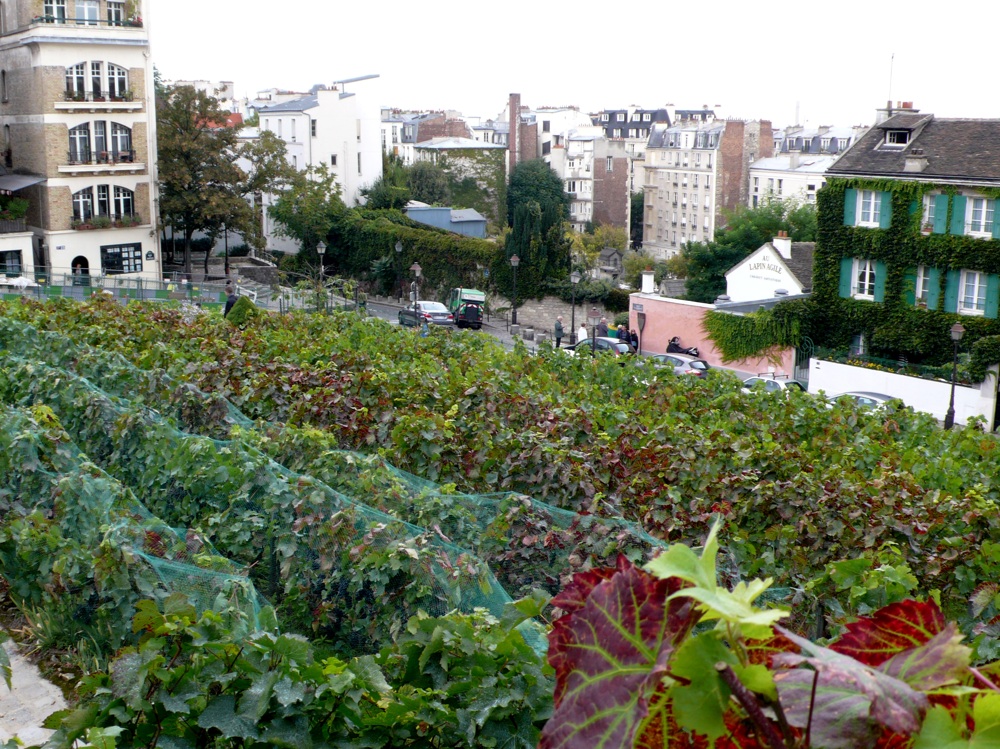
The clos, as it’s called, is behind the Bascilica de Sacre Coeur and five minutes away from our apartment. We’ve stopped and looked through wire fencing at this lush garden of vines and flowers many times. Then last week, surprise! the gates opened, for two days. So George and I grabbed our cameras and set off to walk among the vines.
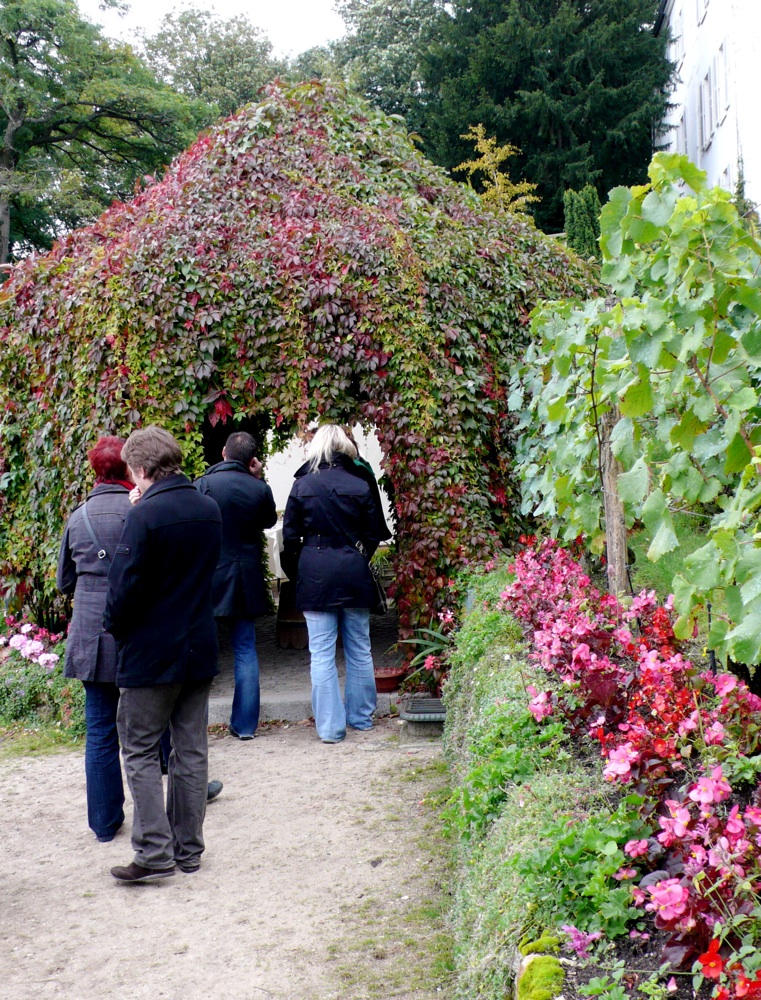
 Clos Montmartre was opened the first weekend of October to celebrate La Fete du Jardin. It’s the way Paris says farewell to summer. At the Montmarte vineyard, a little white tent had been set up, and park employees were on hand to answer questions. I stood with several children in front of a colorful poster showing the pests of Paris (winged and four-footed) but skipped the eco-educational coloring contest. The neighbor-hood dogs didn’t appear to mind being excluded from the event.
Clos Montmartre is also the name of the local wine made principally with gamay, pinot noir and sauvignon grapes planted in this small space. Drinking it has been said to make you “faire sauter comme une chevre”: to make you jump like a goat. I’m not sure this is complimentary.
Drinking wine in Montmartre had long been less expensive than inside the city walls where alcohol was taxed. After its annexation by Paris in 1860, the quarters poor, among them artists and musicians, gravitated to this inexpensive area of taverns and cabarets.
The Moulin Rouge opened in 1989 and quickly became the symbol of Montmartre nightlife. Aristocrat-turned-artist, Toulouse-Lautrec, devoted his career to depicting eccentric performers and high-spirited scenes from dancehall and circus worlds. Note, however, the melancholy gaze of ‘The Girl at the Folies-Bergere’ by Edouard Manet. It suggests that another mood lay beneath the surface of gaiety.
Montmartre experienced a building boom in the early 20th century. During those years the vineyards failed as phylloxera spread through the roots of the grape vines. With open space rapidly dwindling, a few high-profile artists prevailed on the local administration to save at least one token property from development. Vines were replanted in the clos in 1933, and the first wine was released in 1937.
 The 77th anniversary of the grape harvest in Clos Montmartre was celebrated last weekend. The Fete de la Vendage was expected to attract a half million visitors. The three day block party included a big parade, regional food and wine tastings and a fireworks finale at the Bascilica of Sacre Coeur.
Among the highlights of the vendage weekend was a charity auction of French wines. One of the most coveted was Clos Montmartre. A recent winning bid for just one bottle was 45 euros ($60). Word has it that the bragging rights that come with owning a bottle are more satisfying than actually drinking it. Never mind. The wine’s historic value is priceless!
