Paris is the only city I know that holds a beauty contest for bread. The French obsession with the baguette inspired me to blog about the Best Baguette of Paris competition last spring http://www.chezm.com/blog/464-best-baguette . But I wasn’t satisfied by simply recognizing a great baguette. I made a promise to myself that I would learn how it’s made when I returned.
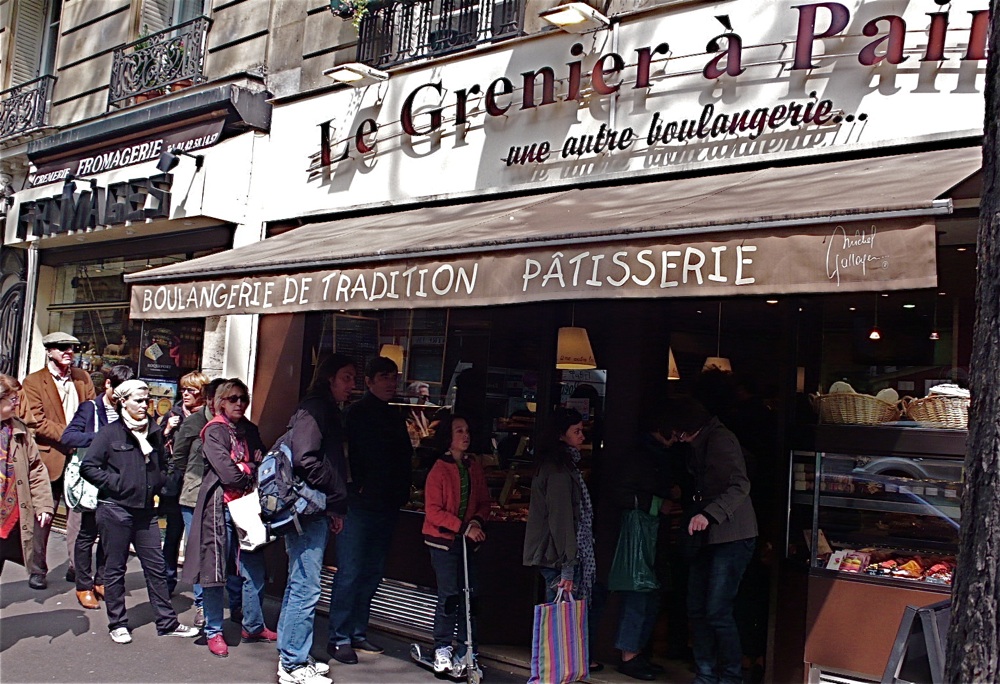
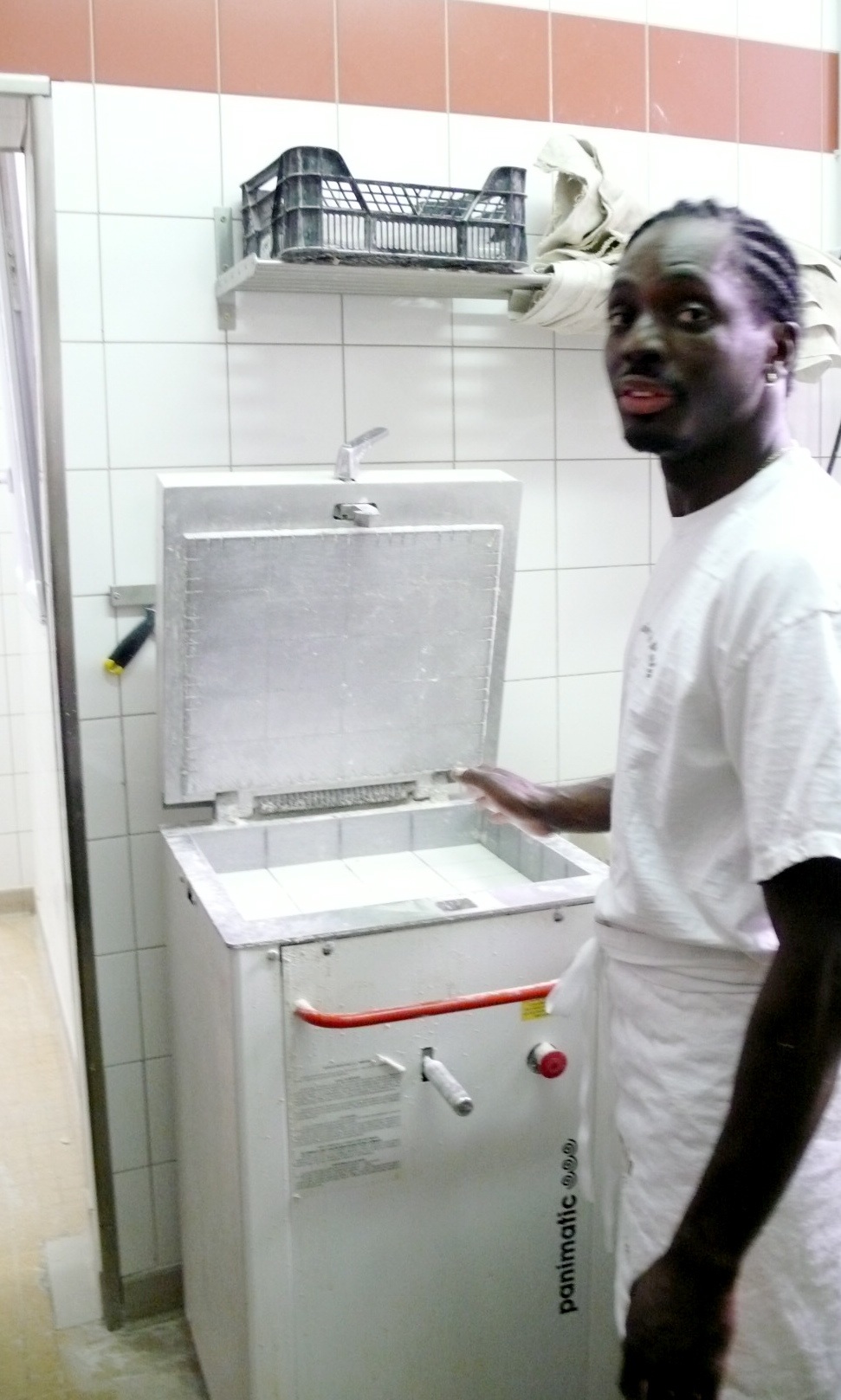
This fall I contacted Djibril Bodian at the bakery he manages on rue des Abbesses soon after we arrived. He agreed to give both my tour groups a look at of his prize-winning process. Now, after listening to Djibril’s explanation twice, I’m ready to give you the inside scoop.
First of all, the bread he demonstrated is called baguettetradition. I know that sounds like a no-brainer, but there can be more than a dozen breads including two or three other baguettes to choose from in a Paris bakery. Its best to be precise when its your turn to order because there’s usually a line out the door behind you waiting for you to pay and go.
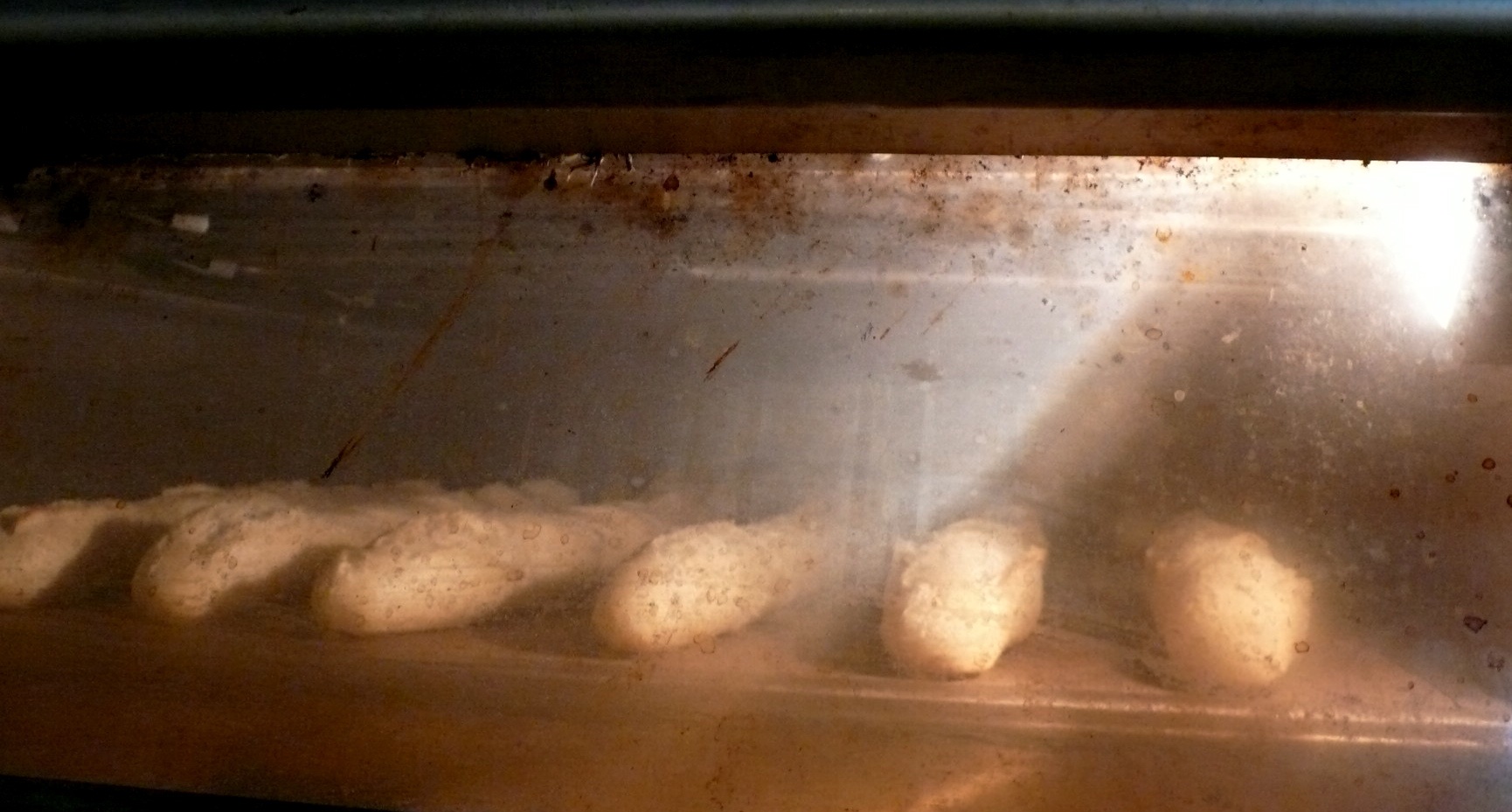
Djibril’s winning baguette is made according to a formula – so much flour, water, salt and fresh yeast –posted on the wall of the mixing room. The flour is funneled into a mixing bowl the size of a large bathtub. The other ingredients are added, and then a large metal paddle mixes them together. It takes about six hours more until a hot baguette is pulled from the oven.
If you buy your bread first thing in the morning, the dough will have been made the previous afternoon and will have spent the night in the refrigerator. This loaf it will be more flavorful, but I haven’t yet been able to get out of bed early enough to enjoy it.
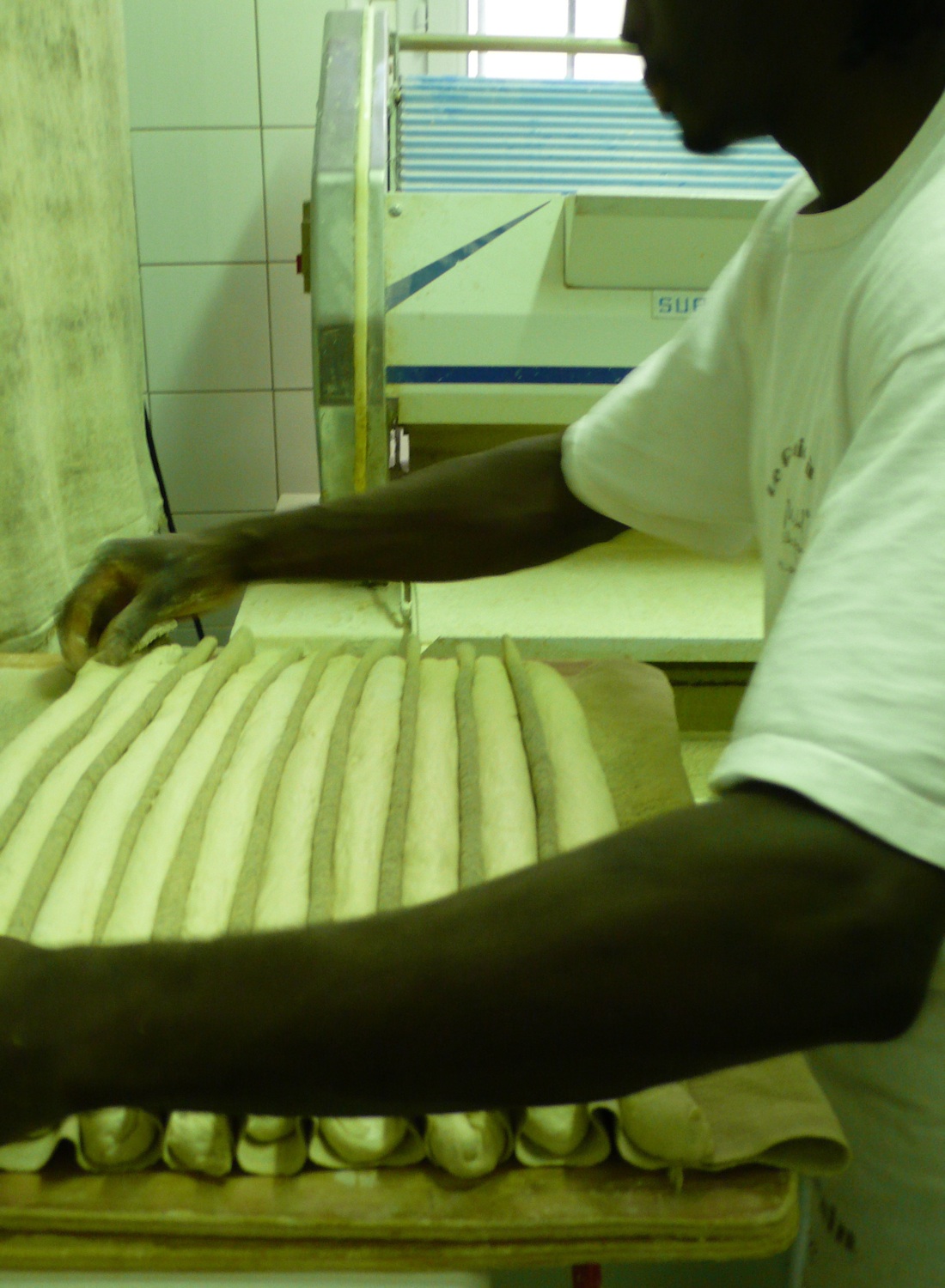
After initial mixing, the dough sits and rises, first at room temperature, then in the refrigerator until it is divided into loaves, shaped into baguettes and baked in the oven. There’s no punching down the dough, no second rising. The process is carefully timed and straight forward. So where does the magic come into play? What makes Djibril’s baguette a winner?
As far as I can tell it’s a combination of a good recipe and the baker’s personal involvement in the process. Can you imagine spending an eight hour shift waiting for bread to rise? Yet telling details hide in even the simplest moves.
Djibril picks up a loaf and points out the raised, golden edge of a slashed opening. It indicates finesse that is important in a competition. And he makes five cuts with a razor blade on each of the hundreds of loaves that go into the oven daily. So, after four years of competing and coming close, Djibril won the best bagette award on his fifth try.
Many times my daily baguette is still warm when I purchase it at the Grenier. The aroma makes it irresistible. Just like half the baguettes I see on the street, the top of mine is missing before I get home.
Note: A video crew from TV5Monde followed one of our tours through the bakery, and I was briefly interviewed (in French). The segment will be aired on November 17.