The August air smells of sweet, ripening fruit. It also swarms with pesky fruit flies. By all means, DO eat the fruit. But DON'T swat the flies. They are distant relatives! We share with them 75% of our genetic material which makes them invaluable to medical research. And these seasonal flies also happen to be a cook’s best friend!
Why? Fruit flies know how to make vinegar, and they provide this service at no charge. It's built into their life cycle. After laying eggs in overripe fruit, female fruit flies take off for a celebratory drink carrying acetobactors on their feet. It's these bacteria that turn the ethanol in fruit juices and wine into the mild acetic acid solution that we call vinegar.
Vinegar defines the taste we call sour. Used in small quantities, vinegar is an excellent means to contrast and accentuate sweet and savory flavors. Any juice containing sugar can become vinegar, including cider, white wine, red wine, malt, rice, sherry and balsamic grape mixtures. Each type of vinegar has its own following and ethnic associations. My preference, not surprisingly, is for the tart bite of home-brewed vinegar.
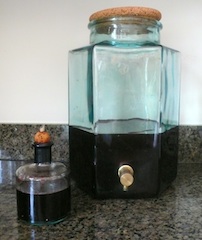
Making your own vinegar is easier than you think, and no fruit flies need be sacrificed in the process. A starter called a 'vinegar mother' is the only active ingredient needed. It is sold online and at shops that specialize in brewing and winemaking supplies. Another option: contact me before one of my classes at the Alliance, and I will bring some of my red wine vinegar starter with me at no charge. (
Here's how get your vinegar production under way:
- Purchase a 2 gallon container (glass or ceramic) preferably with a spigot. Rinse it thoroughly with hot water.
- Follow directions that come with a purchased starter. If you have a gift starter, pour it into a mixture of 3 parts wine and 1 part water.
- Set the lid ajar or cover with cheesecloth, but do not seal the top of the vessel - air is essential to the process. Wait 2 to 3 weeks before drawing off your first cup of vinegar. Add more wine when you remove vinegar. but keep the container no more than half full. Adjust the level of acidity to your taste by adding water periodically to the container.
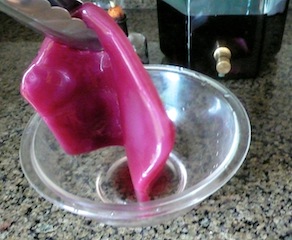
- The “mother” becomes visible as a light film at the top of the liquid. With time it will form a dense, spongy layer that includes cellulose, another byproduct of the fermentation process (pictured above). Remove this layer, drain it and either discard it, or cut into pieces and give it with a little vinegar as a starter to someone else.
- Store the vinegar still in a cool, dark place, ideally the basement or cool closet. Use it when as needed to season salads, soups, stews....
Vinegar is a stealth ingredient, invisible in a finished dish, but critical to its flavor. The Salade Nicoise we prepared in class this summer, pictured below, is a good example. The red wine vinaigrette served with this mix of potatoes, tomatoes, tuna and green beans, all somewhat sweet in character, accentuated their character and freshness.
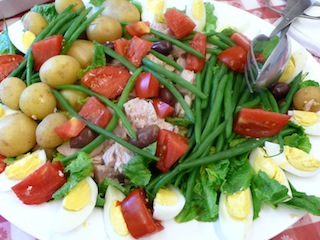
(Photograph by Sabrina Tyus)
A link to the recipe:
http://www.chezm.com/welcome-to-recipes/61-salads/433-salade-nicoise
