The daily lives of the impressionist painters were very much on display in their work. The subjects they chose - family, friends, domestic scenes - give us a glimpse of French middle-class society near end of the 19th century. Only rarely are we able to view an artist's private life as if we were family. The carefully crafted world Claude Monet created at Giverny is one such splendid example.
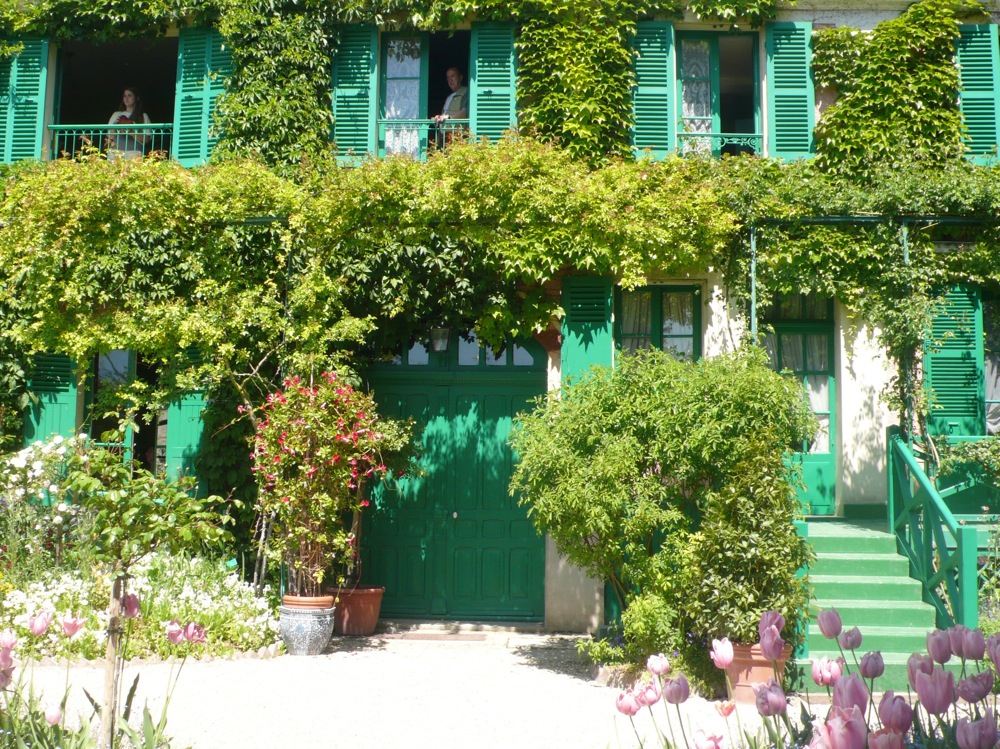
Before you visit, I recommend you read the short memoir of life at Giverny described in Monet’s Table. (The author, Claire Joyes, is the wife of Mme. Monet’s great-grandson.) There you discover that Monet kept cooking journals and directed a two acre kitchen garden. Today, he would be called a ‘foodie’ although I prefer the French word, gourmand.
Monet’s love of life at the table is hidden in plain sight in his home. Regrettably, no picture taking is allowed inside the house, so my description and impressions must suffice. Once inside, a turn left will take you through the parlor, the studio and up the staircase to a bedroom. A turn to the right takes one directly into the chrome yellow dining room easily the most vibrant room in the house. It is dominated by a long table set for twelve (Monet and his second wife, Alice, had eight children between them). Two sets of French doors open onto the large flower garden. The other walls are hung frame-to-frame with Japanese prints. The pattern on the blue porcelain table service set at the table echos this oriental theme.
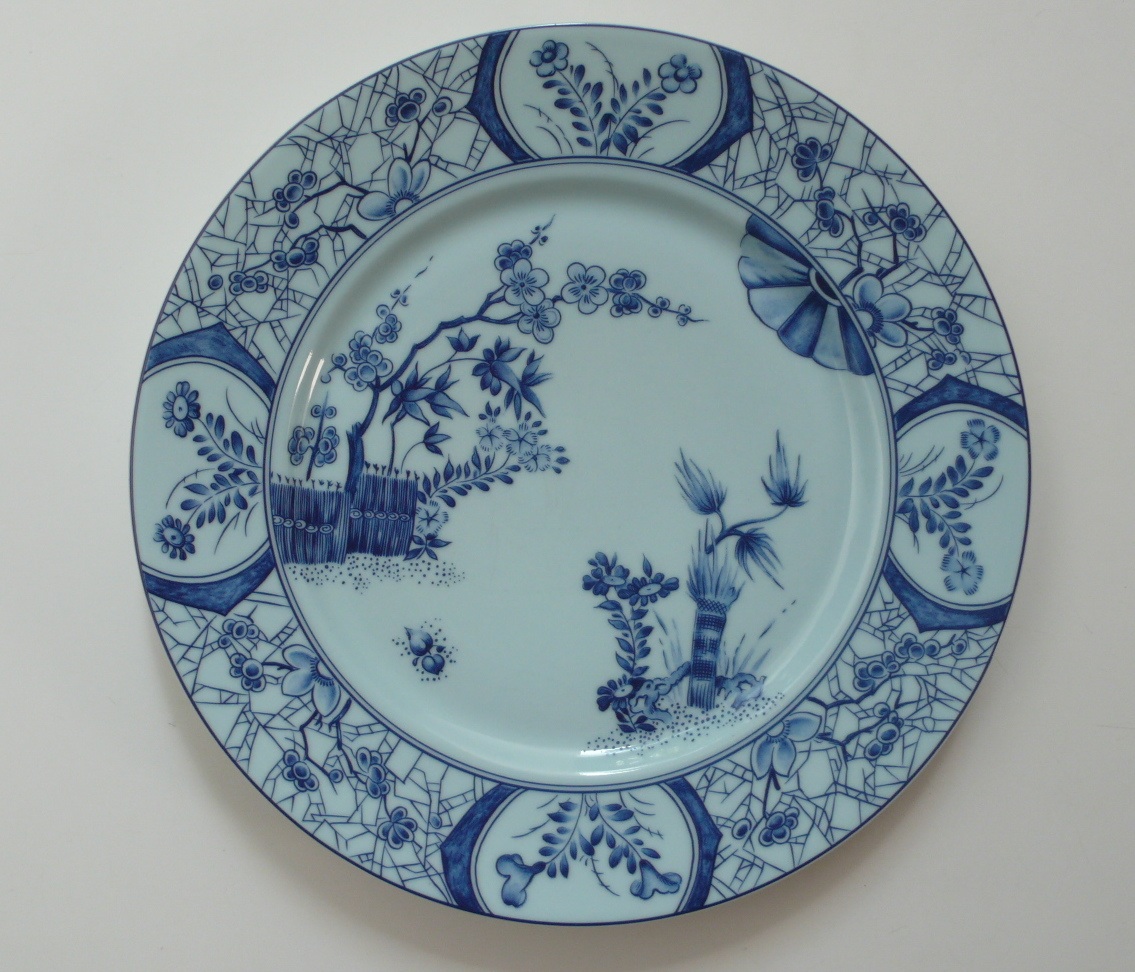
The walls, the color of the lighter shade in the porcelain above, seem to cool the kitchen behind the dining area. The black stove that runs the length of one wall dominates it. White tiles with a blue starburst design cover the back-splash, hood and walls above the range. They lighten the otherwise meditative mood as do the polished copper pots hung along the wall.
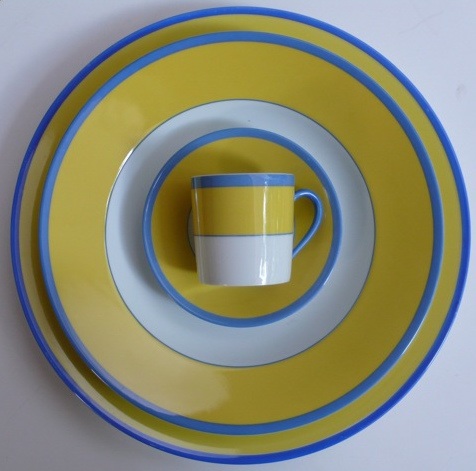
Monet personally orchestrated the colors and décor of these two rooms as well as the family’s porcelain pattern that combines a distinctive ring of chrome yellow with a blue edge. In recent years the Haviland company has reissued the Monet pattern. You can see this glowing yellow and blue, without making a trip to France, wherever Haviland porcelain is sold.
Monet’s Table contains many recipes from the painter's journals. They are recipes from artist friends and from his favorite Parisian restaurants. They were adapted by renowned chef Joel Robuchon and tested in the kitchen at Giverny. (Talk about a dream job.)
Don’t waste time imagining Claude Monet in a chef’s whites and toque. His interest in eating well did not extend to actually cooking. His second wife Alice, the former wife of a rich collector, didn’t know her way around the kitchen either. Meals at Giverny were prepared by a succession of hired cooks who Alice instructed after consulting with her husband.

Mme. Joyes writes at great length about the varieties of fruit trees, vegetables and herbs grown in Monet’s extensive kitchen garden. It had it's own full-time gardener who took directions from Monet. The artist made every planting decision and bartered with others for seedlings he wanted. He became explosive if a vegetable wasn't picked at the exact time he requested. Monet was also demanding with the purveyors of all the other food stuffs delivered to Giverny.
On a typical work day, the rhythm of the Monet household revolved around the artist’s painting schedule. He rose before dawn in the morning, ate a hearty English breakfast with eggs and fish or meat and went out to paint all morning in a studio-boat on the river. Lunch was the main meal of the day. The children were dismissed from school early so that meal could be served promptly at 11:30. Monet went so far as to order that no second helpings be offered on days when one slow-eating member of the family was present.
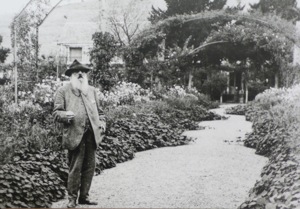
In the afternoon, Monet closed himself off in the studio for hours. Only Alice was allowed to be in the room while he was working. Dinner was served early, usually soup, left-overs and cheese, so that the master could retire early.
The Monets entertained at mid-day and often outside. The picnic scenes he painted in the 1880’s show willowy figures in a shaded woods. The colors are intense, the brushwork is tight but the mood is relaxed. As Monet’s fame grew so did the number of visitors. They included artists, musicians, actors and politicians. Monet would abandon his work on these occasions and socialize with his friends in the beautiful setting he himself had created.
Click on this link to access a list of recipes from Monet’s Table that I've taught at ChezM:
http://www.chezm.com/component/search/Monet?ordering=&searchphrase=all
